Content & SEO Blog

Don’t just publish.
Build a knowledge library.

SEO-focused editorial content built around real customer questions, search intent and your expertise — researched, structured and connected, written by people and owned by you.
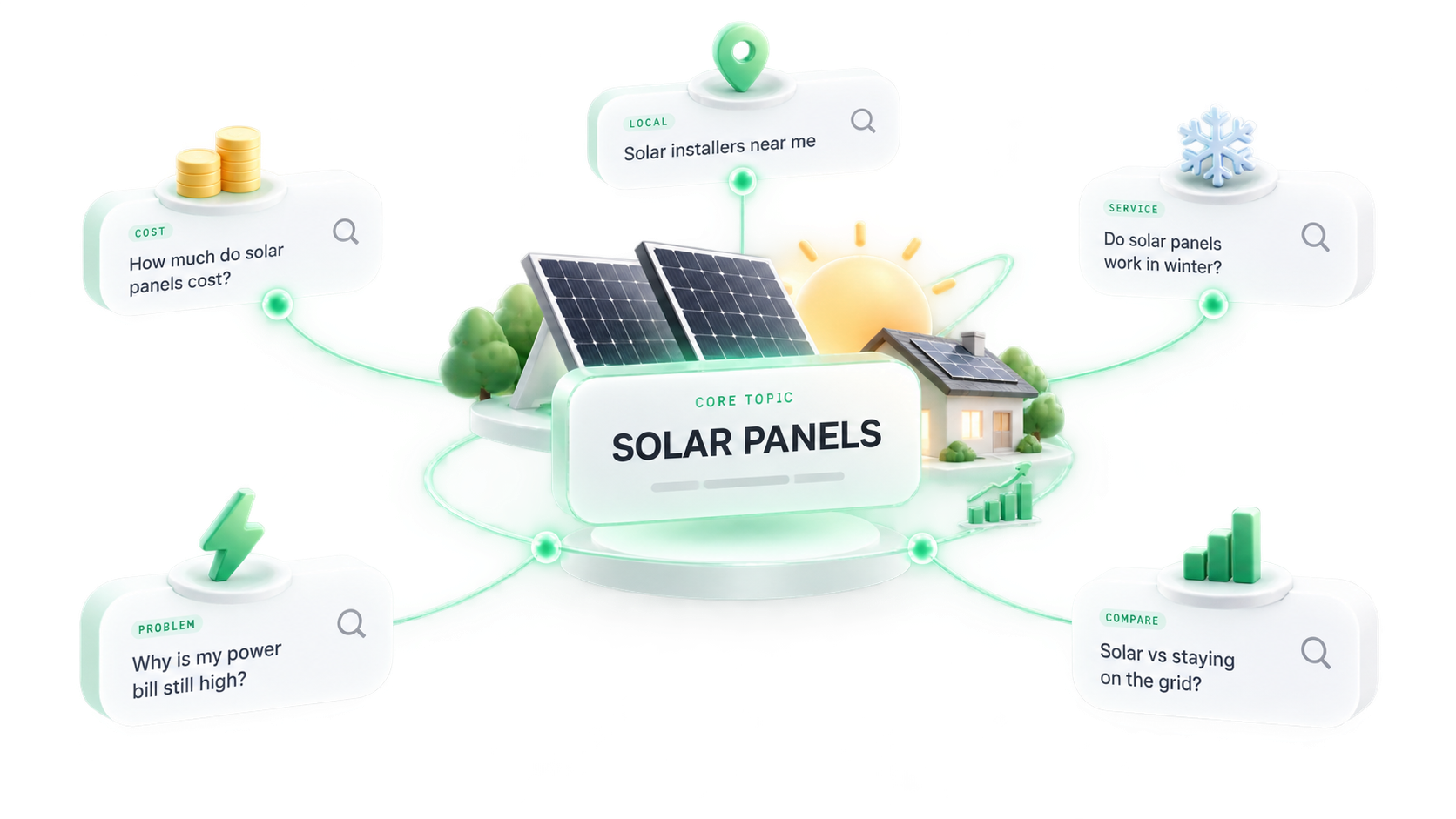
A core commercial topic — solar panels — surrounded by the real customer questions people search, clustered by intent (cost, problem, service, compare, local).

01 · Start here

Start with what people actually ask.

Keywords come later. First we listen to the real questions your buyers type — then map each to intent and a piece worth writing.
One customer question mapped to search intent — cost, problem, comparison, service, decision.
Real questions from people
“How much will this cost?”
“Can this be repaired?”
“Which should I choose?”
“How long does it take?”
“Do I need to replace it?”
Content opportunity
Pricing guide
Diagnosis article
Repair vs replace
Process explainer
Decision guide

Intent

One topic. Many
reasons to search.

Around a single commercial theme sits a whole structure of intent — not 20 random posts.

Not 20 random articles — a topic structure. Each cluster is a real reason someone searches, and each becomes a piece that supports the rest.
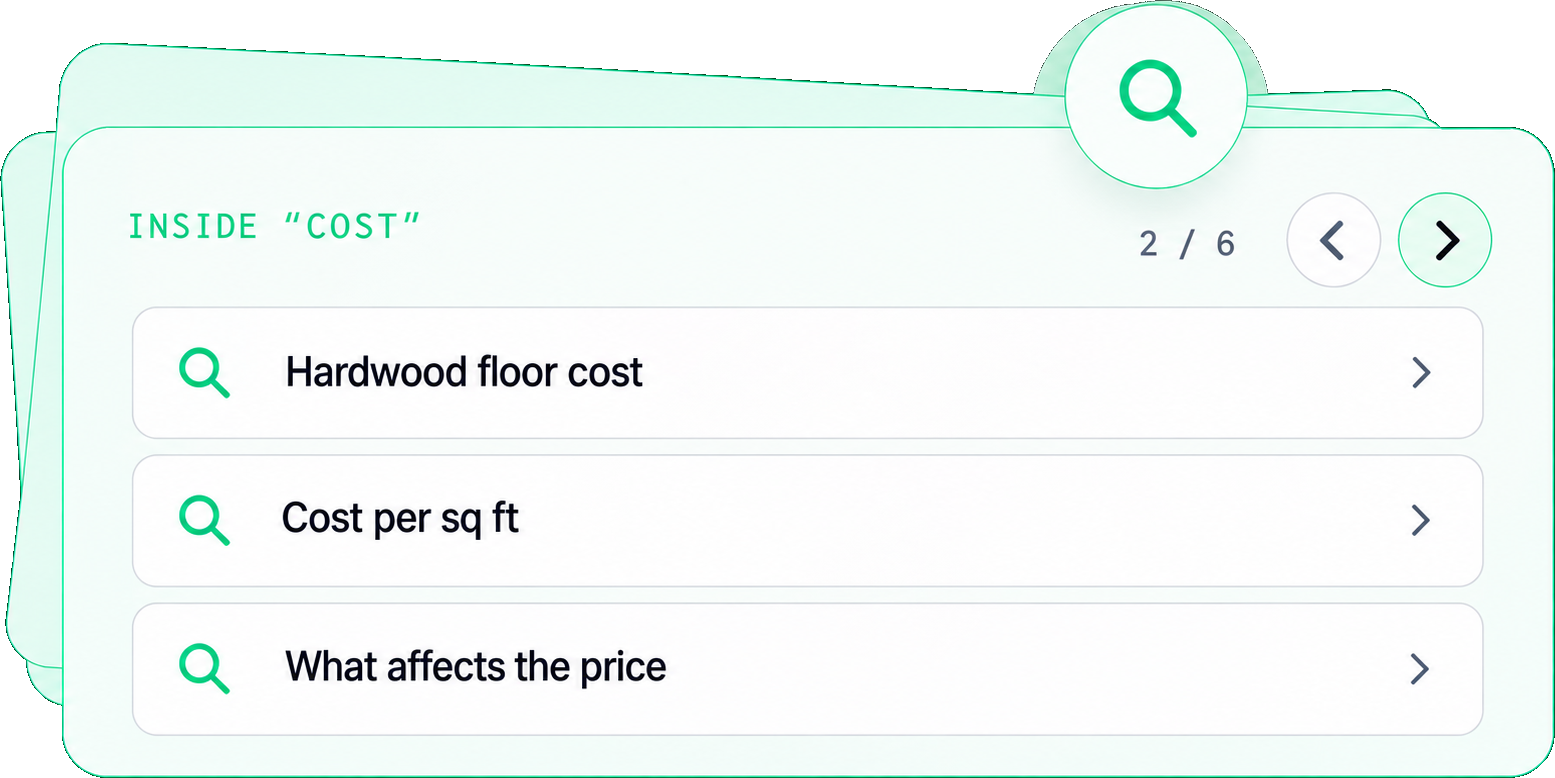
Inside the “Cost” cluster — the real searches it covers.

02 · Architecture

Articles should work together.

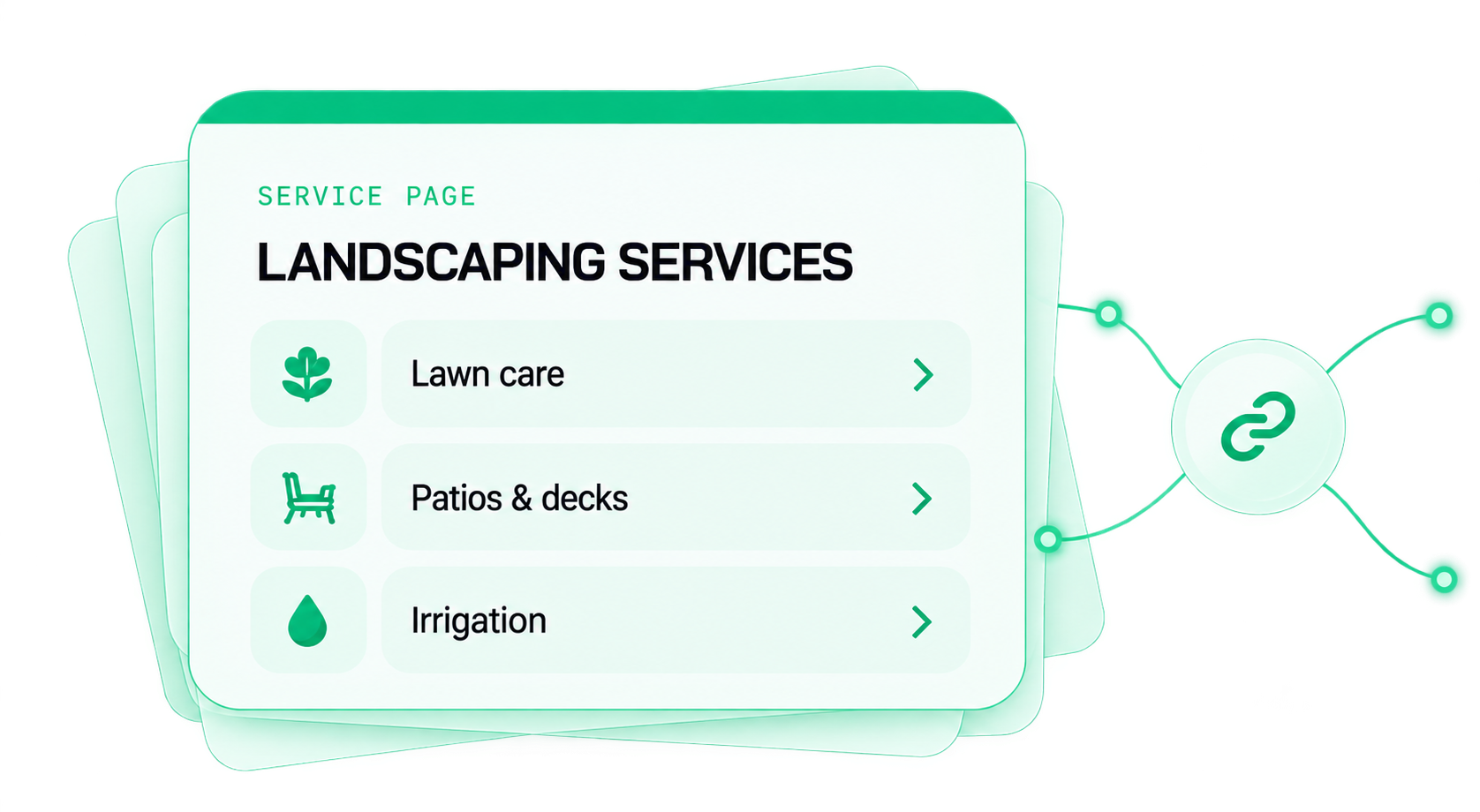
A service page and the articles around it, linked on purpose — so each piece lifts the others.
A service page — Landscaping services with Lawn care, Patios & decks and Irrigation — linked out to its supporting articles.

Content shouldn’t live in isolation.

Lawn care cost internal link
Signs of lawn disease internal link
Sod vs seed internal link
How often to mow internal link

03 · Article anatomy

What makes a useful article?

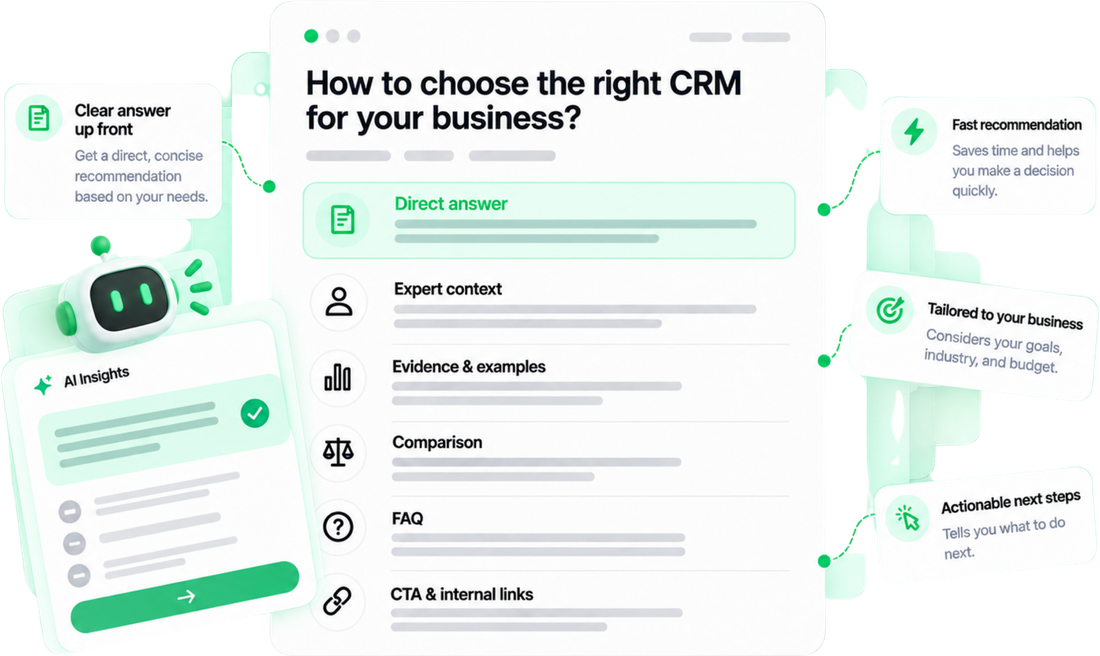
One article, built in layers — hover to see what each part does for the reader and for search.
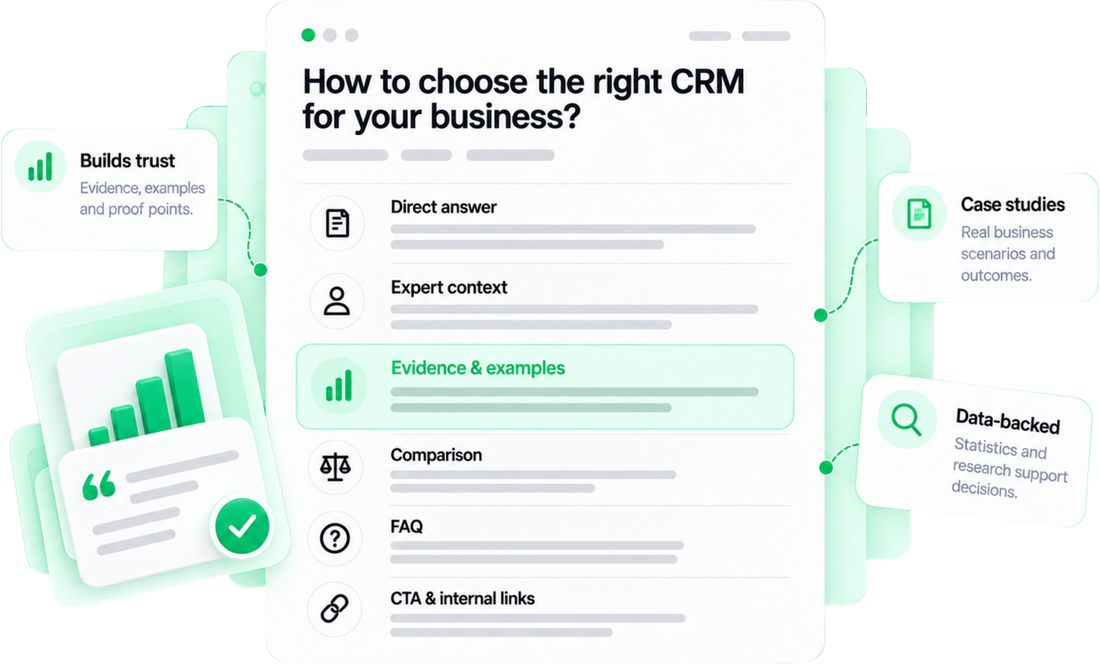
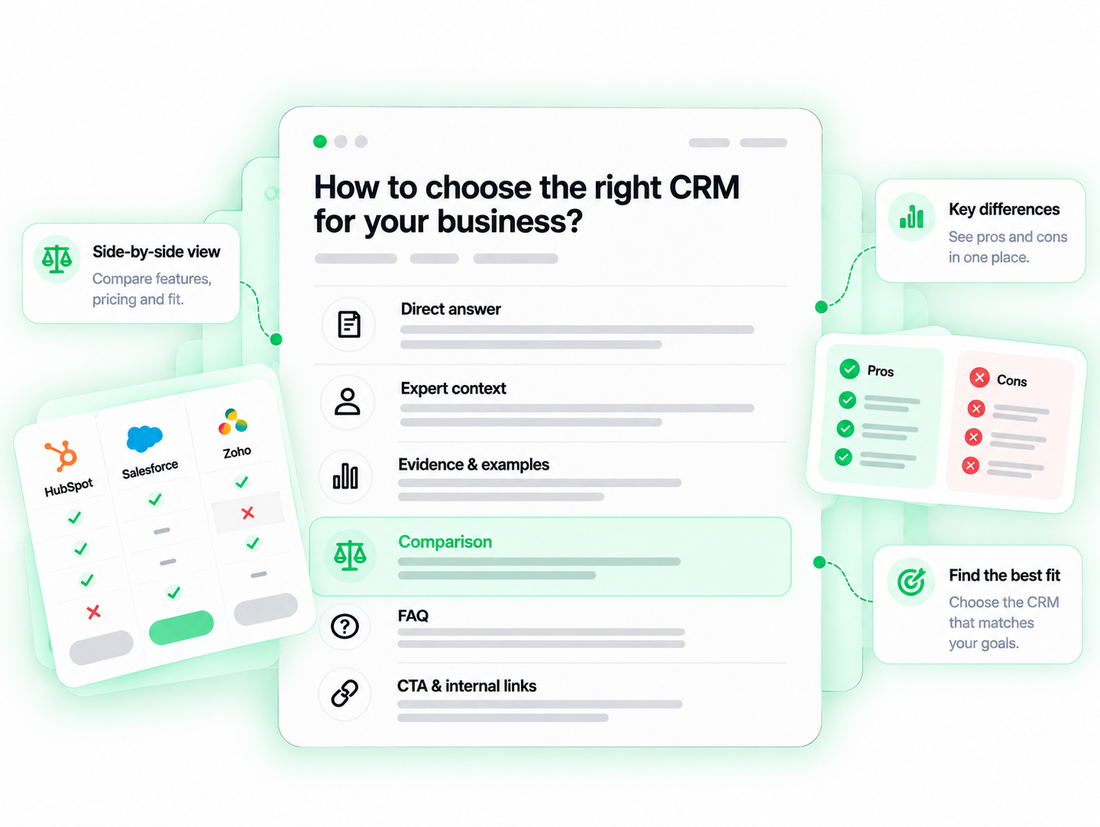
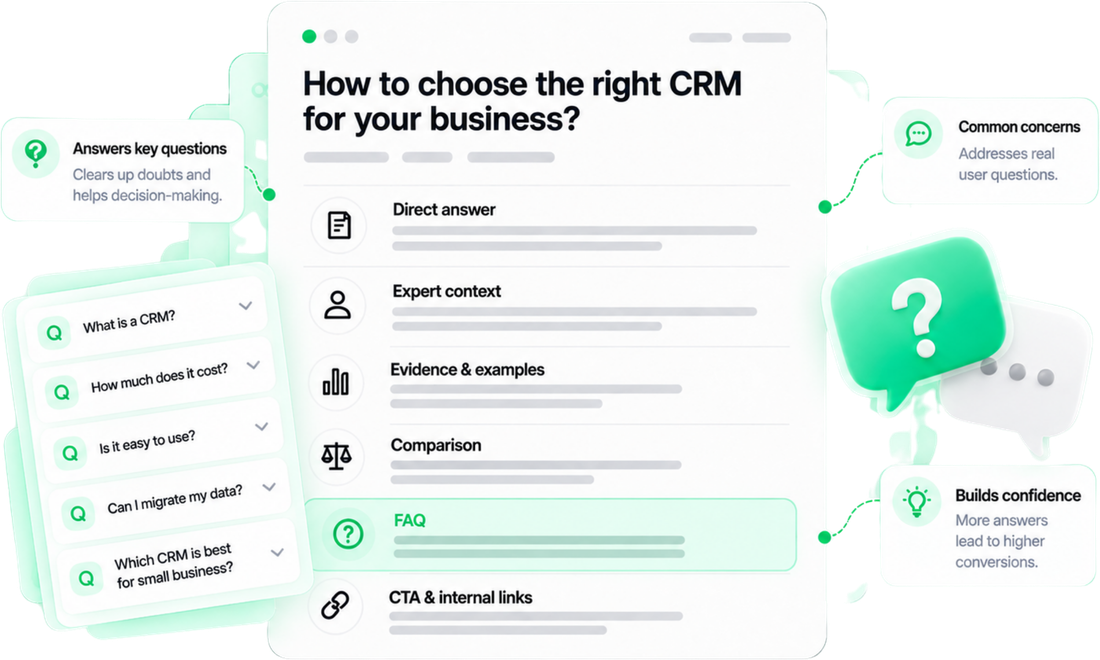
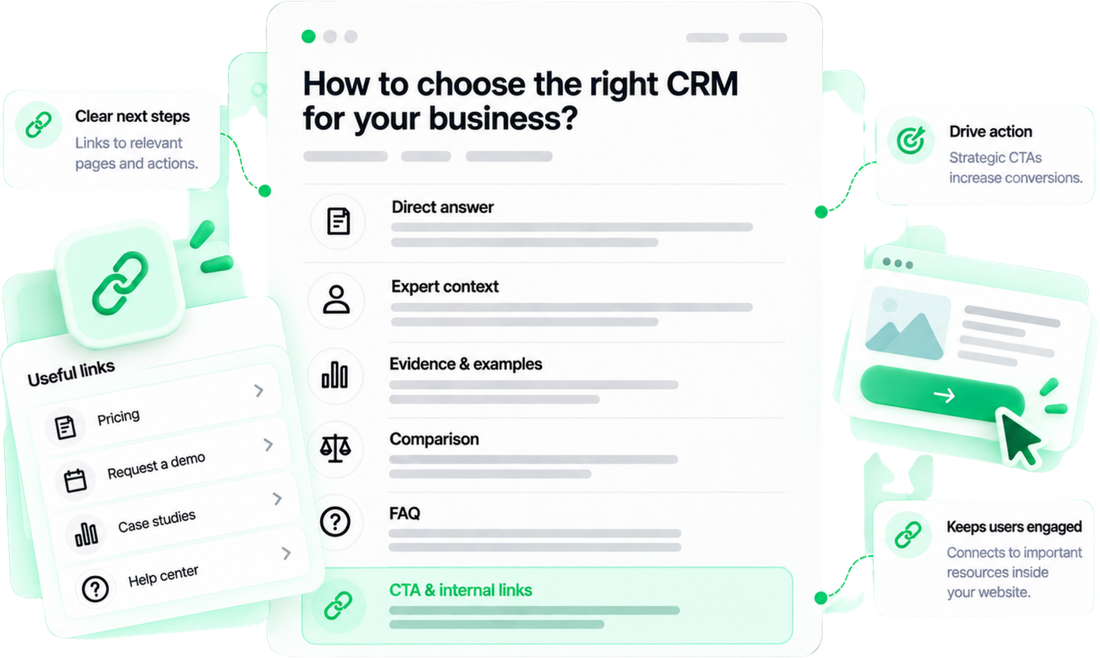
01Direct answeranswer
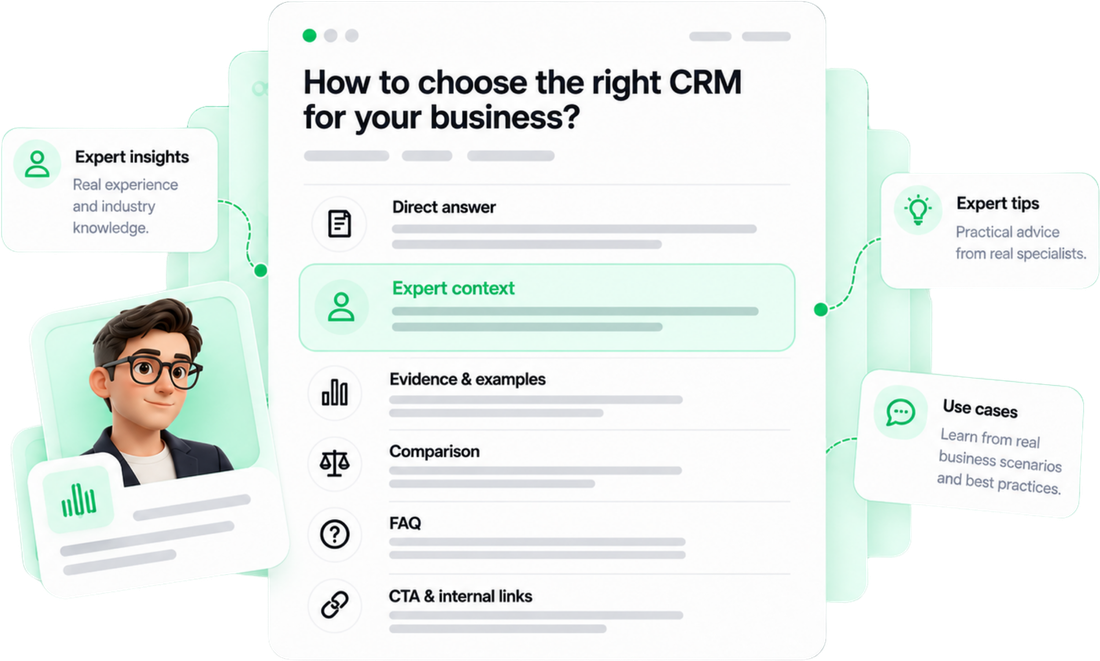
02Expert context
03Evidence & examples
04Comparison
05FAQ
06CTA & internal links
Direct answer — one article, built in layers.

04 · Expertise

We don't invent your expertise.

We extract it — from an interview, your notes and materials — instead of generating empty SEO text.
Interview transcript

“Most clients plateau because they keep the same weights for months— there’s no progressive overload, so the body stops adapting.”

0:24
Key insight

Same weights for months → no progressive overload → strength plateau.

TrainingProgressive overloadPlateau
Published article

“When the load never changes, muscles adapt and stop growing — progress stalls until you add weight, reps or tempo.”

05 · Readable & structured

Easy to read. Easy to understand.

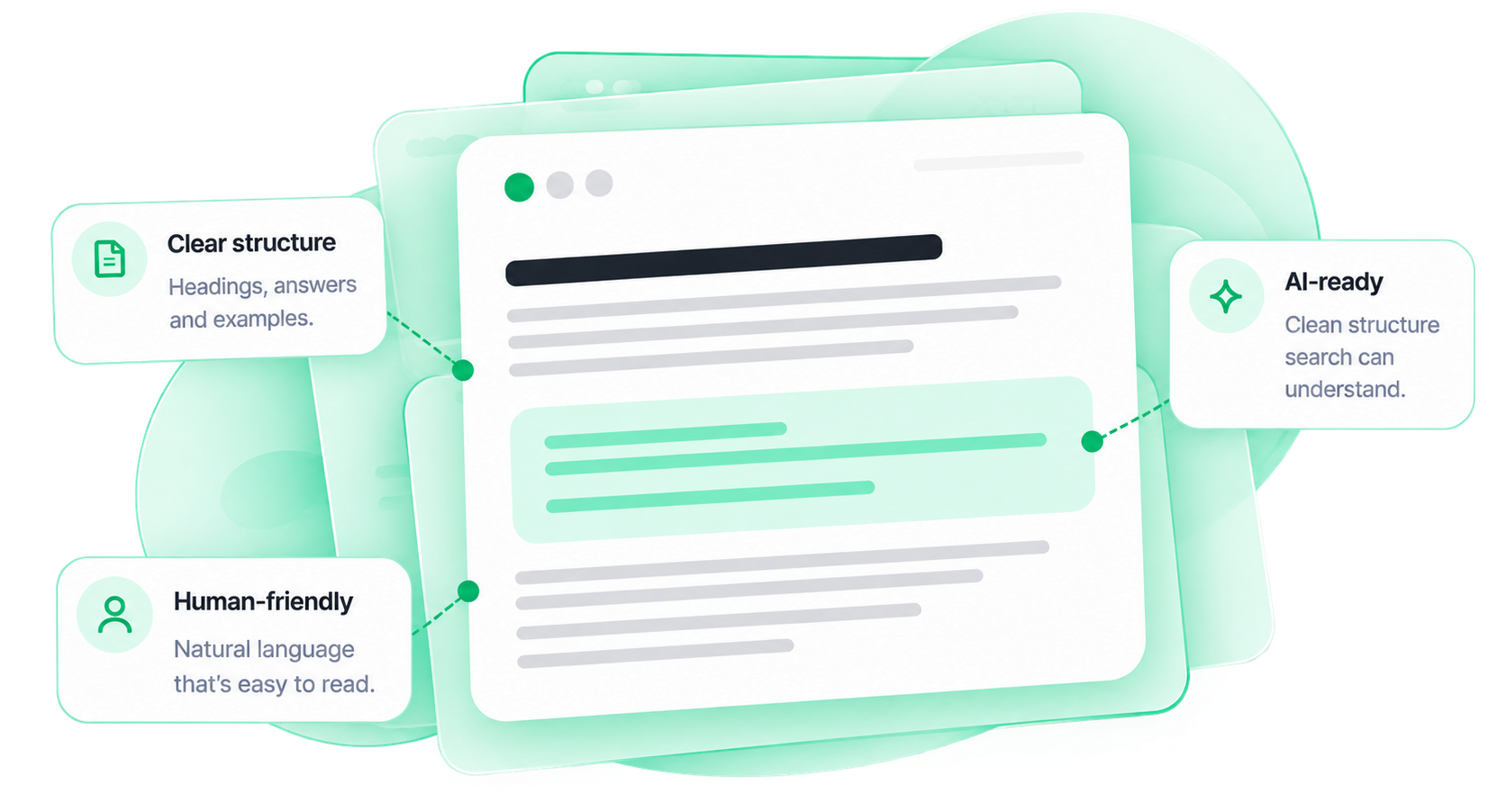
Written for people first, structured so search and AI can follow it. AI-readiness — not a citation promise.
An article structured for both people and machines
How a person reads it
H1
Headline
Grabs attention and sets the topic.
01
Answer
Direct, clear answer up top.
02
Explanation
A deeper look with context.
03
Examples
Real examples to make it concrete.
04
FAQ
Common questions, answered.
05

Written for people first — clear answers, real examples.

06 · Editorial process
From question to published article.

Discover, research, brief, write, edit, optimize, publish — watch the article fill in.
01 — Discover02 — Research03 — Brief04 — Write05 — Edit06 — Optimize07 — Publish

07 · Example set

What a content set can look like.

Illustrative content cluster
Commercial page

Emergency Plumbing — Denver

Pillar

When Does a Water Heater Need Replacing?

Learn

Water Heater Repair vs Replacement

Compare

What Causes Low Water Pressure?

Learn

How Much Does Drain Cleaning Cost?

Price

Can a Cracked Pipe Be Repaired?

Decide

08 · What you get

More than a Google Doc.

Each project is an editorial package — brief, research, article, structure, links and notes, ready to place.
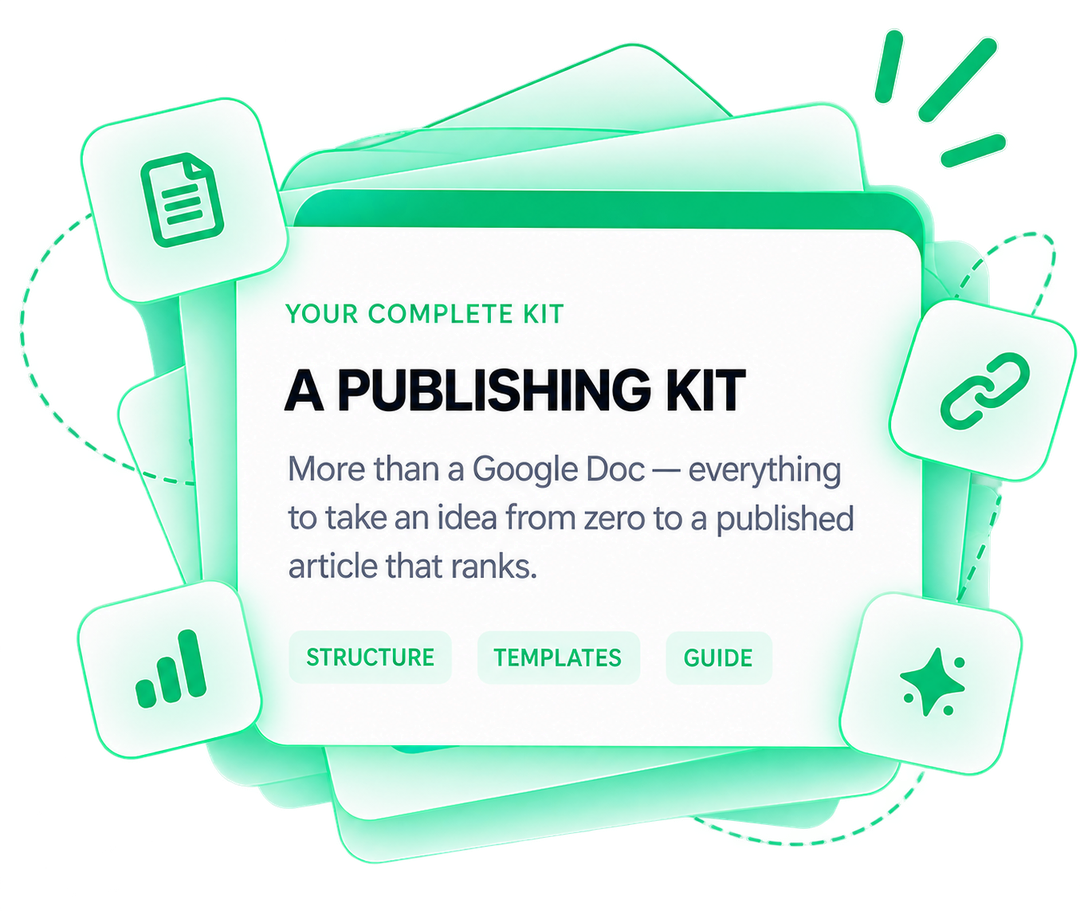
A publishing kit — the full editorial package
01
Topic / keyword map
Primary and secondary topics.
02
Content brief
Goal, audience and angle.
03
Research
Sources, stats and references.
04
The article
Full draft, structured and editable.
05
Meta title & description
SEO-ready fields.
06
Headings & structure
Clear H1–H3 hierarchy.
07
Internal link plan
Relevant links and anchor text.
08
FAQ structure
Common questions with answers.
09
Sources
All references in one place.
10
Publishing notes
Final checklist and next steps.

09 · Standards

Not content for content's sake.

What we won’t write, and what we will. Every article is built to solve real questions and add real value.
Yes
Customer questions
Real expertise
Clear search intent
Useful answers
Relevant examples
Connected content
No
Keyword-stuffed filler
Generic AI articles
Topics nobody searches for
Rewritten competitor posts
2,000 words because “SEO says so”
Fake expertise
Yes
FAQ

Straight answers.

What the service covers, how it works, and what you own.

A content brief covering your offer, buyer, voice and search targets; an approved outline; the researched, human-written article; on-page structure with headings and metadata; an internal-link plan; a FAQ structure; sources; and publishing notes — delivered ready to place and owned by you.

Ready when you are

Turn what you know
into content people can find.

Real questions, real expertise, structured into a library that keeps working — written by people, owned by you.