Your website is the one storefront that never closes, which is exactly why it gets tried at three in the morning on a Sunday. Most owners assume attackers only chase banks and big brands.
The data says the opposite. The small, unmaintained site is the easy mark, and the bill for cleaning up after a break-in often lands somewhere you cannot absorb.
Here is what actually threatens a small business website in 2026, what a breach really costs, and the short list of fixes that stop most of it.
Small sites are the target, not the exception
The picture in most owners' heads is a hacker in a hoodie choosing a victim. Reality is duller and much more dangerous: it is almost all automation. Bots scan millions of sites a day looking for one thing they know how to exploit, and they do not care whether the site belongs to a law firm or a bakery.
Verizon's 2025 Data Breach Investigations Report analyzed more than 12,000 confirmed breaches. Ransomware showed up in 44% of them, up from 32% the year before. For small and mid-sized businesses the number is worse: 88% of their breaches involved ransomware.
Attackers do not target your business by name. They target a known flaw, and your site either has it or it does not.
That single shift in framing explains almost everything about small business security. You are not defending against a person who is curious about you. You are trying not to be the low-hanging fruit a program finds on its next pass.
How break-ins actually happen
The methods are boring, and that is the point. Three doors account for the large majority of small business break-ins.
- Stolen or reused passwords. The 2025 DBIR found stolen credentials were the most common way in, tied to 22% of all breaches. For attacks aimed straight at websites, 88% used stolen credentials. One password leaked in an unrelated breach, then reused on your admin login, is all it takes.
- Known software flaws left unpatched. More than 11,000 new vulnerabilities were disclosed across the WordPress ecosystem in 2025, a 42% jump over the previous year, and 91% of them were in plugins rather than the core software. The window to react keeps shrinking: attackers now weaponize a freshly disclosed flaw in a median of about five hours.
- Exposed forms and inputs. Contact forms, search boxes, and login fields that are not filtered give attackers a way to inject code or flood the site. A firewall handles most of this, but only if one is actually running.
The volume is hard to picture until you see it. Roughly 13,000 WordPress sites are compromised on a typical day. In one 48-hour stretch in October 2025, a single plugin flaw drew around 1.6 million attack attempts. None of those were personal.
What a breach actually costs
The ransom is the headline, not the whole bill. The median ransomware payment in 2025 was about $115,000, which is already enough to close many small businesses on its own. But the payment is often the smaller cost.
When a site is hacked, the damage stacks up fast:
- Downtime. The site is offline or defaced while you clean up. Every hour is lost sales, lost leads, and lost trust.
- A malware flag. Google and browsers mark a compromised site as dangerous. Your organic traffic and paid clicks can drop to near zero overnight, and the flag lingers after you fix the site.
- Exposed customer data. If any customer information was stored, you may face notification duties, legal exposure, and a reputation hit that outlasts the technical fix. What those notification duties actually require depends on the privacy laws that apply to you; our website privacy law compliance guide breaks them down.
- The rebuild. With no clean backup, restoring means rebuilding, which costs more than the original site did and takes far longer than a rollback would have.
For a business that gets most of its leads online, a week of that is not an inconvenience. It is an existential event.
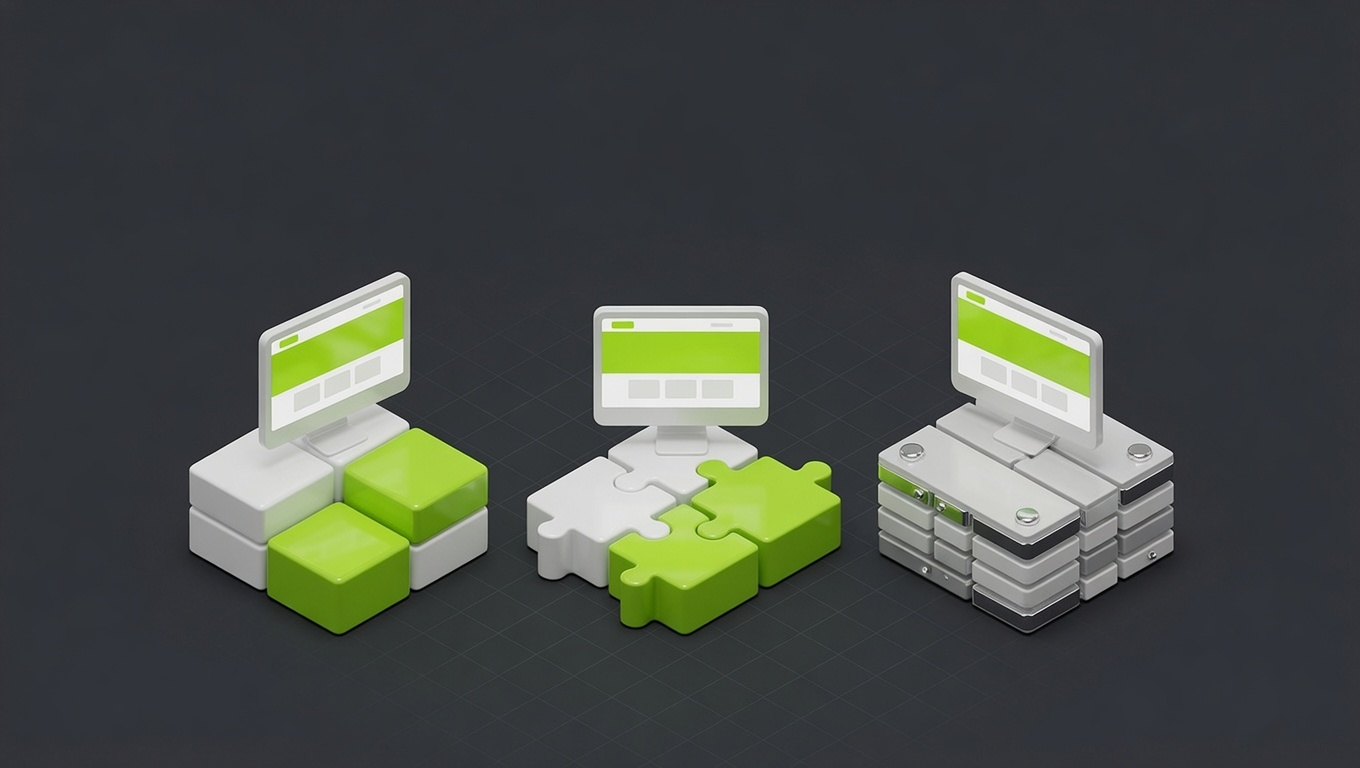
Two sites, one attack. Only one stays online.
The same automated scan hits both on a Sunday night. The difference is not luck, it is maintenance.
The unmaintained site
Plugins months out of date
A bot finds a known flaw and is inside before anyone notices. In 2025 the median time from a new WordPress flaw going public to attackers using it was about five hours.
One shared admin login, reused password
Stolen credentials are the single most common way attackers get in. With no second factor, one leaked password is the whole door.
No recent backup
When the site is defaced or encrypted, there is nothing clean to restore. Recovery means rebuilding from scratch, with days of downtime.
Google flags it
A hacked site gets a malware warning in search results and browsers. Organic traffic and trust fall to near zero while you scramble.
The maintained site
Updates applied on a schedule
The known flaw is patched before the scan arrives. Most break-ins exploit something that already had a fix available.
MFA on every login
A leaked password alone does nothing. The attacker still needs a second factor they do not have, so automated attempts fail at the door.
Automated offsite backups, tested
If the worst happens, you roll back to a clean version in minutes, not days. The ransom demand loses most of its leverage.
A firewall filtering traffic
Common attacks like SQL injection and bot floods get blocked before they ever reach the site.
The security that actually matters
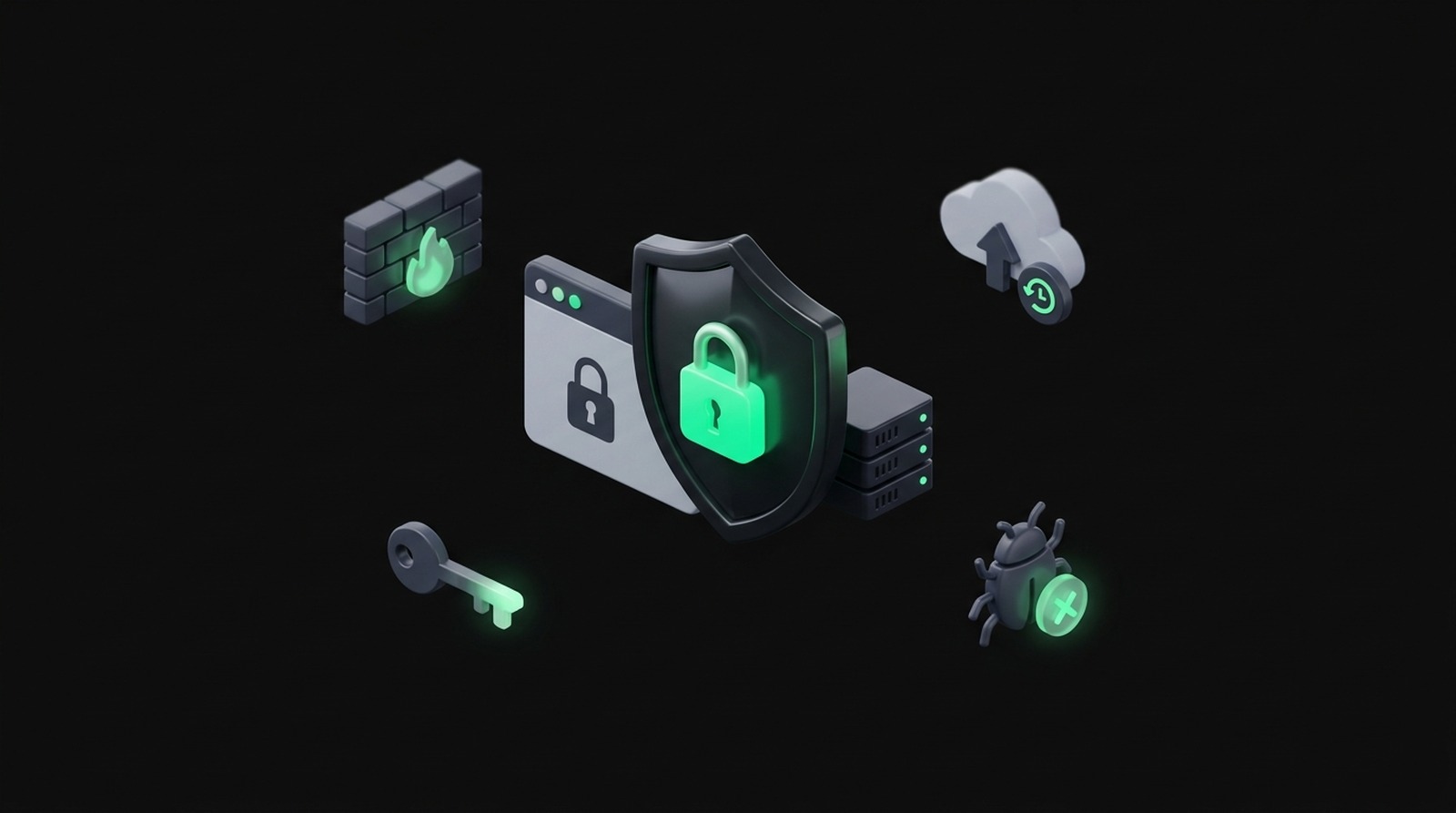
Here is the reassuring part. You do not need an enterprise security team. A small handful of measures stops the overwhelming majority of automated attacks, and most of them are free or nearly so. In rough order of impact:
- Turn on multi-factor authentication everywhere. This is the single highest-value move. Since most break-ins ride in on stolen passwords, requiring a second factor makes a leaked password useless on its own.
- Keep everything patched, on a schedule. Core software, plugins, and themes. Given the five-hour weaponization window, a site checked once a quarter is exposed for weeks at a time. Weekly is the floor.
- Run automated offsite backups, and test them. A backup you have never restored is a hope, not a plan. Tested backups turn a ransomware demand into a shrug.
- Put a web application firewall in front of the site. It filters malicious traffic, blocks common injection attacks, and absorbs bot floods before they reach your pages.
- Force HTTPS everywhere. An SSL certificate encrypts data in transit and is table stakes for trust and for search. It is free through most hosts, and it is one of the same basics that keep a site fast and healthy.
- Use least privilege on logins. No shared admin accounts, no more access than each person needs, and remove old users the moment they leave.
If you run WordPress, do these three things this week
Because plugins are where 91% of the flaws live, WordPress owners get outsized returns from three quick moves: delete every plugin and theme you are not actively using, turn on automatic updates for the rest, and install a reputable security plugin that patches virtually and alerts you to intrusions. That trims the attack surface and shortens your exposure window in an afternoon.
"Doesn't my host already handle this?"
This is the most expensive assumption in small business security. Hosting keeps the server running and patches the server's own software. It does not, in most plans, watch your site's plugins, enforce MFA on your logins, or guarantee a clean backup you can actually restore.
The gap is bigger than most owners expect. In independent 2025 testing, the built-in defenses at hosting providers, including their own firewalls and network tools, blocked only a small fraction of attacks that used already-known, already-catalogued vulnerabilities, in some tests as little as 12%. The flaw was public, the patch existed, and the traffic still got through.
Read your host's terms and you will usually find the security responsibility split. They cover the infrastructure. You cover what runs on it: your code, your plugins, your users, your content. A managed host is a strong foundation, but a foundation is not a finished house.
Why "set and forget" is the real vulnerability
Notice that almost every fix above is ongoing, not a one-time build. That is the uncomfortable truth of website security: it is maintenance, not a purchase. The site that was locked down at launch and never touched again is the site with plugins eighteen months out of date and a backup nobody has checked.
This is where small businesses tend to fall into one of three patterns. Some assign it to a specific person internally, which works right up until that person gets busy. Some lean entirely on a plugin, which helps but cannot apply judgment. And some fold it into a monthly care plan so updates, backups, monitoring, and firewall rules are somebody's actual job.
There is no wrong answer, but there is a wrong non-answer, which is assuming a live website takes care of itself. It does not, and the bots are counting on that assumption. If your current site is too far gone to safely patch, a proper rebuild is often the cleaner path than nursing an unmaintained one.
If you would rather not think about any of this again, that is exactly what a maintained build is for. Our website builds ship with security handled from day one and kept current after launch, so the storefront that never closes is also the one that does not get left open. If you are not sure where your current site stands, get in touch and we will tell you straight.
FAQ
Questions, answered.
What small business owners ask us about website security.
They target small business websites more than large ones, just not in the way most owners picture. Almost none of it is a person deciding to go after your company by name. It is automated: bots crawl millions of sites looking for one known weakness, a login they can guess or reuse, or an out-of-date plugin with a public flaw. A small site with no maintenance is the easiest possible match, which is why small and mid-sized businesses account for a large share of breaches. You are not too small to be attacked. You are exactly the size the bots are built for.
WordPress itself is not insecure, but the way most small business WordPress sites are run makes them an easier target. In 2025 more than 11,000 new vulnerabilities were disclosed across the WordPress ecosystem, and about 91% of them were in plugins and themes rather than the core software. A site running a dozen plugins that nobody updates is a large attack surface. A well-maintained WordPress site with few plugins, current updates, and MFA is perfectly safe. A custom or modern hosted build has fewer moving parts to patch, which is one reason it needs less ongoing babysitting.
Far less than a breach. The core protections, an SSL certificate, multi-factor authentication, automated backups, and reputable hosting with a firewall, are either free or cost a few dollars a month. The real cost is time and attention: someone has to apply updates, watch for problems, and test that backups actually restore. Most small businesses either assign that to a specific person or fold it into a monthly care plan. Compare that to the median ransomware payment, which sat around $115,000 in 2025, and the math is not close.
Attackers rarely want your product or your card data specifically. A hacked brochure site is still valuable to them: it can be used to send spam, host phishing pages, mine for stolen passwords that customers reused elsewhere, or hold your own site for ransom. Even a site with no checkout has a login, a contact form, and a reputation, and all three are worth attacking. The absence of a shopping cart does not make you invisible to a bot.
Common signs are a sudden drop in traffic, a Google or browser warning that your site is unsafe, pages redirecting somewhere strange, spammy content or links you did not add, or your host suspending the account. Slower, quieter signs include unfamiliar admin users and login attempts from odd locations. The catch is that a well-run intrusion tries to stay hidden so it can keep using your site. That is why passive monitoring, a security plugin or a hosting layer that alerts you, matters more than checking manually now and then.