"Should we hire someone in-house, work with an agency, or just use freelancers?" It's one of the most common questions we get, and the honest answer annoys people who want a one-word verdict: it depends on your stage. The right call at $500K in revenue is the wrong call at $5M. Pick based on what sounds impressive and you'll either overpay for a full-time hire you can't keep busy, or under-resource a function that's core to your growth. Here's the framework we actually use with clients.
The three options, honestly
Each model is a genuine trade-off; there's no universally "best" one, only the right one for your situation. Here's each on the same terms: what you get, what it costs, the risk, and who it suits.
The three options, honestly compared
Same questions for each: what you get, what it costs, the risk, who it suits.
Freelancer: lowest cost, highest management burden
What you get: one person's skillset, maximum flexibility, lowest cash cost. The catch: you carry the management. You're the strategist, project manager, and quality control. Great for a specific, well-defined task; risky as your entire growth engine, and bus-factor of one. Best for: tight budgets and clearly-scoped, one-off work.
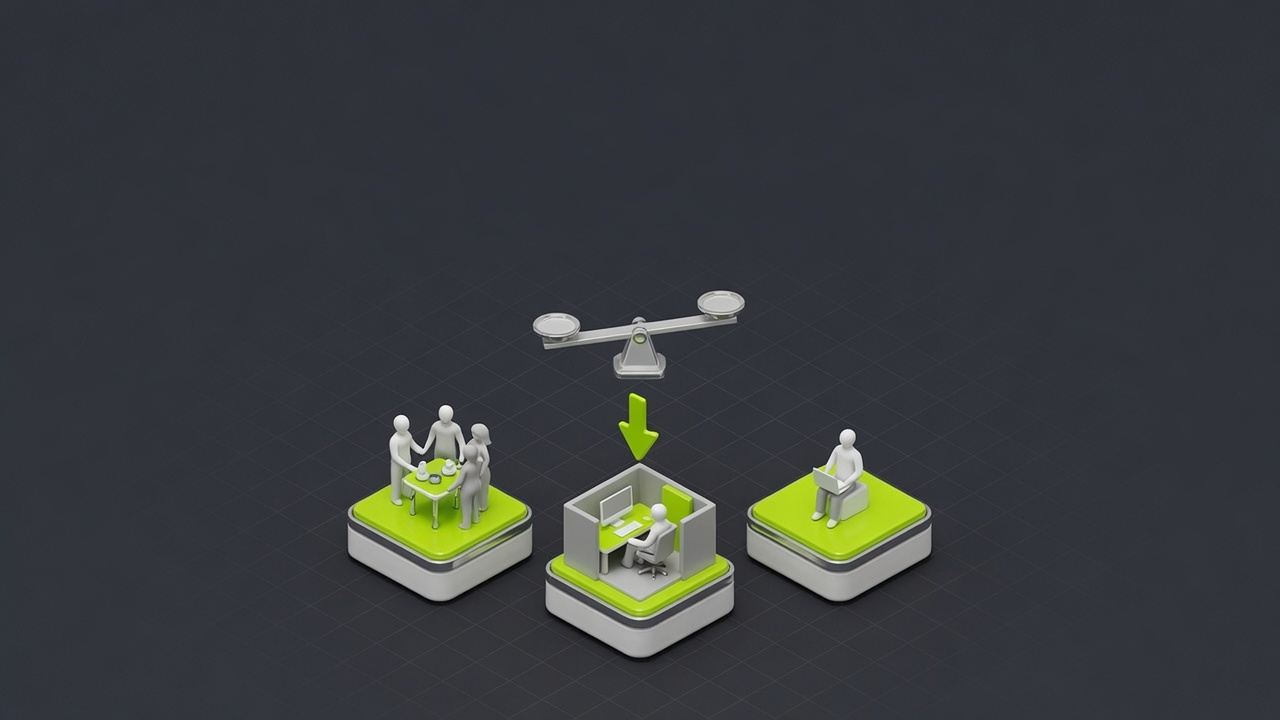
Read those side by side and a pattern emerges. You're really trading along three axes: cost, control, and management burden. Freelancers are cheap and flexible but you manage them. In-house gives total control but you carry the salary and the recruiting risk. Agencies sit in the middle: more cost than a freelancer, far less than a salary, with a team and a system instead of a single point of failure. Your answer is wherever those three axes land for your stage.
A framework by stage
The cleanest way to decide is by revenue stage, because that's the best proxy for volume and what you can justify.
Under ~$1M ARR. You usually can't justify a senior full-time marketer or developer, and a junior one will flounder without direction. This is where an agency or a small set of trusted freelancers wins: senior-level work without a senior-level salary, and flexibility while you're still figuring out what actually moves your business.
~$1M–$5M ARR. The hybrid zone, and often the highest-leverage setup of all. The move here is usually one strong in-house generalist who owns strategy and coordination, with an agency or specialists executing the heavy lifting: development, paid media, design. Your in-house person keeps the context; the agency brings capacity and specialist depth. You get the best of both without building a department.
$5M+ ARR. Now the volume justifies building an in-house team, with agencies retained for specialist spikes: a rebrand, a platform migration, a new paid channel. You've earned the predictability to hire ahead of need.
The four questions that actually decide it
Forget the labels for a second and answer these honestly:
- Is this work continuous or a project? Continuous, evolving work favours a team (in-house or agency); a defined project favours a freelancer or project-based agency.
- Do you have someone who can manage it well? No internal manager → an agency that brings its own process beats freelancers you have to wrangle.
- How fast do you need senior-level output? Agencies and senior freelancers deliver from week one; a new hire needs months to ramp.
- What's the real cost of getting it wrong? A bad in-house hire costs months and a salary. A poor agency fit costs a notice period.
Answer those four and the right model usually stops being a debate.
Our honest take
For most businesses under $5M, the smart play is an agency, or an agency-plus-one-internal-owner model: senior output, no hiring risk, and the flexibility to scale up or down as priorities shift. Hire in-house when the work is constant, the volume is high, and you have someone to manage it well. And switch models as you grow; the worst outcome is staying in a setup you've outgrown out of inertia, or jumping to in-house out of insecurity before the volume justifies it. There's also a middle path worth knowing about before you commit to either: how a subscription web design model works gives you senior output on tap without the hiring risk of either extreme.
This decision also interacts with what you're building: if your big near-term need is a website, what one actually costs will shape the build-vs-buy math, and a lot of "we need to hire someone" problems are really automation problems in disguise: a system, not a salary.
If you'd like a straight recommendation for your stage, that's a quick conversation and we'll give you the honest answer even when it isn't "hire us." See the work we've delivered for clients, learn how we work and who we are, explore our subscription model for ongoing needs, or book a discovery call.
Match the model to your stage, not to whatever a single vendor happens to be selling.
FAQ
Questions, answered.
The build-vs-buy questions we work through with clients.
It depends on your stage. Under roughly $1M in revenue, an agency or freelancers usually win: you get senior-level work without a senior-level salary, and flexibility while you're still figuring out what works. Between $1M–$5M, a hybrid is often best: one strong in-house generalist who owns strategy, with an agency executing the heavy lifting. Past $5M with high, constant volume, building an in-house team starts to make sense. Match the model to your stage, not to what sounds most 'serious'.
A freelancer is cheaper in cash, but not always in total cost. With a freelancer you carry the management, strategy, and quality control yourself, and that's real time and risk. An agency costs more per month but bundles strategy, execution, accountability, and a whole team's skillset, with no single point of failure. For a defined one-off task, the freelancer usually wins on cost. For ongoing, evolving work, the agency often wins on total value once you price your own management time.
When three things are true: the work is continuous (not project-based), the volume is high enough to keep someone fully occupied, and you have someone who can actually manage them. Usually that aligns with passing roughly $5M in revenue, or sooner if one function (say, content or paid ads) is core and constant. Hiring in-house too early means paying a full salary for a role you can't keep busy, plus the recruiting and management overhead. Volume and management capacity are the real triggers, not ego.
Freelancer: bus-factor of one and the management burden falling on you, so if they vanish or underperform, you're exposed. In-house: a bad hire costs months of salary and lost time, plus recruiting effort. Agency: a poor-fit relationship, though the downside is capped at a notice period, not months. Weigh the cost of getting it wrong, not just the monthly price. The cheapest option with the highest failure cost isn't actually the cheapest.
Yes, and many businesses do as they grow. A common path: start with freelancers or an agency early, add one in-house owner in the hybrid zone, then build a team while retaining agencies for specialist spikes. The models aren't permanent commitments; they're tools for a stage. The mistake is staying in a model you've outgrown out of inertia, or jumping to in-house out of insecurity before the volume justifies it.
The hybrid pairs one strong in-house generalist (who owns strategy, context, and coordination) with an agency or specialists doing the heavy execution (development, paid media, design). It works because it gets you the best of both: someone internal who deeply understands your business, plus the capacity and specialist depth of an outside team, without the cost of building a full department. For businesses in the ~$1M–$5M range, it's often the highest-leverage setup available.
Ask four questions. Is this work continuous or a one-off project? Do you have someone who can manage it well? How fast do you need senior-level output? And what's the real cost if it goes wrong? Continuous work with no internal manager points to an agency. A defined project points to a freelancer. Constant high-volume work with a manager in place points to in-house. Answer those honestly and the right model usually becomes obvious.
Because the honest answer genuinely depends on your stage, and recommending the wrong model loses trust fast. We tell businesses under $1M that an agency or freelancers fit, businesses in the hybrid zone to hire one internal owner and use us for execution, and large high-volume operations that in-house plus specialist support makes sense. Pushing every business toward a retainer they don't need is how agencies get a bad name. The right recommendation is the one that fits you, even when it's not us.