"How much does a website cost?" is a question with the same honest answer as "how much does a vehicle cost?": anywhere from nearly free to more than a house, depending entirely on what you actually need. Unsatisfying, so let's make it concrete: here are the real 2026 price tiers, what you genuinely get at each, the costs nobody puts in the quote, and the counterintuitive reason the cheapest option is frequently the most expensive over three years.
The pricing matrix
| Tier | Price range | What you get | Best for |
|---|---|---|---|
| DIY | $0–$500 | You build it on a website builder. Templates, your time, basic result. | Side projects, testing an idea |
| Template setup | $500–$3,000 | Someone configures a premium template for you. Looks fine, limited customization. | Very early businesses, simple needs |
| Freelancer | $3,000–$10,000 | A custom-ish site, one person's skillset, you manage the project. | Defined projects, tighter budgets |
| Studio | $10,000–$80,000 | Strategy, custom design, copy, development, SEO, a team. A real asset. | Growing businesses that convert traffic |
| Enterprise | $80,000+ | Custom platforms, integrations, large teams, ongoing scale. | Large orgs, complex requirements |
Most small businesses that want a site to actually do something (generate leads, sell, build trust) belong in the freelancer-to-studio range. Below that you're buying a presence, not a performer. Above it, you're usually paying for scale you don't yet need.
What you actually get at each tier
The price gaps aren't arbitrary; they map to how much real work happens.
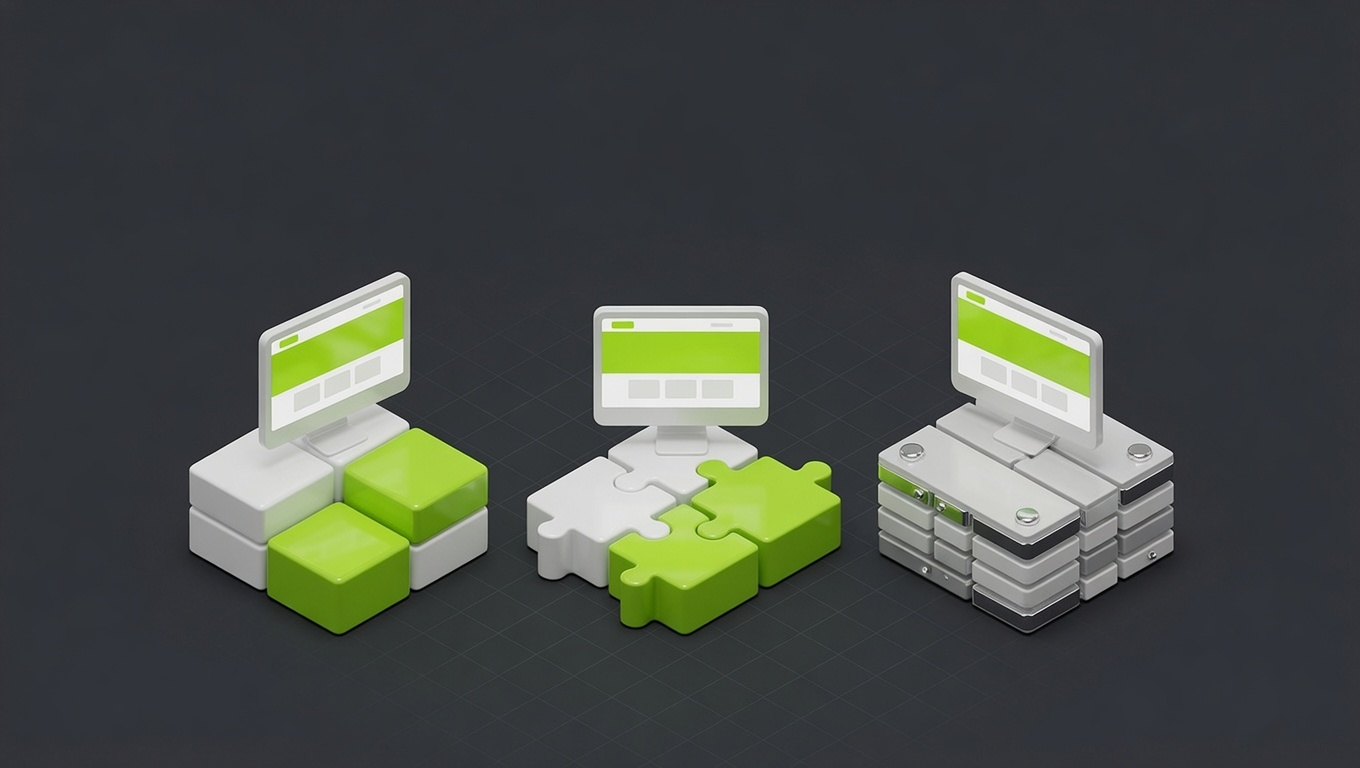
DIY and templates buy you a spot on the internet. You're doing (or skipping) the strategy, copy, and design yourself. For a simple brochure or a test, that's completely fine; overspending here is the real mistake. Tools like Squarespace, Framer, or a WordPress template get you live cheaply.
Freelancers buy you one person's skillset and your own project-management time. Great when the scope is clear and you can steer it. The risk is bus-factor and breadth: one person rarely nails strategy, design, copy, development, and SEO equally.
Studio buys you a team and a system: someone owns strategy, someone designs, someone writes, someone builds, someone handles SEO and performance. This is where a website stops being a digital business card and becomes a conversion asset. It's our bracket, and it's where the work that moves revenue actually gets done.
Enterprise buys custom platforms, deep integrations, and the team to run them at scale. If you need it, you know you need it.
The costs nobody quotes
The headline build price is rarely the real price. Budget for these or they'll ambush you:
- Hosting: $0–$50/month depending on platform and traffic.
- Domain: $10–$20/year.
- Premium plugins / apps: $50–$300/year for forms, SEO tools, booking, etc.
- Maintenance & updates: security patches, plugin updates, fixes, ongoing.
- Content & photography: real copy and images, if not included.
- The big one, the rebuild: what you pay when a cheap initial build can't grow with you.
Always ask a vendor for the all-in first-year cost and the ongoing run cost, not just the build number. A quote that omits these isn't cheaper; it's just hiding where the rest of the money goes.
Why the cheapest option often costs the most
Here's the part that surprises people. A budget build looks dramatically cheaper on launch day. But factor in the hidden run costs and the rebuild you'll need when you outgrow it in 12–18 months, and the three-year total tells a different story. Hover the chart to see a realistic scenario:
3-year total cost of ownership
A realistic scenario: the cheap build looks cheaper on day one, then the hidden costs and the inevitable rebuild catch up. Hover to compare.
That crossover is the whole point. The budget path wins on day one and loses by year three, and the worse part isn't even the money, it's that you spent three years with an asset that underperformed. This is not an argument to always spend more. If you genuinely need a simple site forever, the cheap path is correct and never crosses over. It's an argument to match the spend to your trajectory. Growing fast? Build on a foundation that grows with you. Staying small and simple? Don't let anyone talk you into a studio build you won't use.
How to evaluate a quote
When you get a number, look straight past it to these questions:
- What's included: strategy, copy, design, development, SEO, training, or just "a website"?
- All-in first-year cost: build plus hosting, plugins, and maintenance.
- Ownership: do you own the site and code afterward, or are you renting?
- Timeline and revisions: how long, and how are changes handled?
A vague, suspiciously low quote that skips these usually means the gaps reappear later as change-orders. A clear, itemized quote is itself a signal of how the whole project will be run. If you're still narrowing down who to hire before you get to the quote stage, see how to choose a web studio. (For the timeline side specifically, our breakdown of how long a website takes to build sets realistic expectations, and if you're weighing platforms, Webflow vs WordPress vs custom code covers the cost-of-ownership differences.)
How we price it, transparently
We work in three tiers so the model fits the need: a fast Sprint for a focused launch, a full Build for a complete business site, and an Operate subscription for ongoing design and development. A typical business website lands in the studio bracket (more than a freelancer, less than an agency billing padded hours) and we quote the all-in number, run cost included, up front.
See what that buys in the work we've shipped and our client showcase sites, explore the business website service or a starter website offer, and if you want ongoing rather than one-off, the Operate subscription covers it.
The honest summary: don't ask "how much does a website cost." Ask "what will this cost me over three years, and what will it actually do for the business." Answer that and the right tier becomes obvious.
FAQ
Questions, answered.
Everything people ask us about this, answered straight.
It spans a huge range because 'website' covers everything from a one-page DIY site to a custom platform. Realistic tiers: DIY $0–$500, template setup $500–$3,000, freelancer $3,000–$10,000, studio $10,000–$80,000, and enterprise $80,000+. Most small businesses that want a site that actually performs land in the freelancer-to-studio range. The number that matters isn't the build price. It's the 3-year total cost including hosting, maintenance, and the rebuild you'll need if you go too cheap.
Because you're not buying 'a website'. You're buying strategy, design, copy, development, and ongoing support, and each can be skipped or done deeply. A $500 template gives you a place on the internet. A $30,000 studio build gives you a conversion-focused asset with custom design, real copywriting, performance work, and a team behind it. The range reflects how much of that work is actually being done.
The ones that never appear in the headline quote: hosting ($0–$50/mo), domain ($10–$20/yr), premium plugins or apps ($50–$300/yr), SSL (usually free now), maintenance and updates, content/photography, and the big one, a rebuild when you outgrow a cheap initial build. Always ask a vendor for the all-in first-year and ongoing cost, not just the build price.
Often, yes, but not always. If you genuinely need a simple presence and nothing more, a template is fine and overspending is the mistake. The false economy happens when a growing business buys the cheapest option, outgrows it within 18 months, and pays to rebuild, ending up spending more over three years than if they'd done it properly once. Match the spend to your trajectory, not just today's budget.
Look past the number. Ask: what's included (strategy, copy, design, dev, SEO, training)? What's the all-in first-year cost with hosting and maintenance? Who owns the site and code afterward? What's the timeline and revision process? A vague low quote that omits these usually means the gaps become change-orders later. A clear itemized quote is itself a signal of how the project will be run.
Both models are legitimate. A one-time project suits a defined build you'll own. A monthly subscription (like our Operate retainer) suits businesses that need continuous design and development (frequent changes, new pages, ongoing optimization) without hiring in-house. If your site is a living growth asset rather than a set-and-forget brochure, the subscription model usually wins on value.
We work in transparent tiers: a fast Sprint for a focused launch, a full Build for a complete business site, and an Operate subscription for ongoing work. A typical business website sits in the studio bracket: meaningfully more than a freelancer, meaningfully less than an agency padding hours. We quote the all-in number up front, including what it costs to run, so there are no surprises.
Sometimes, but plan for it deliberately. If you start on a flexible platform with clean structure, upgrading is an evolution. If you start on a locked-in cheap builder, 'upgrading' usually means rebuilding from scratch. If you know you'll grow, the smart move is to start on a foundation that can grow with you, even if the first version is small.