Rent a client portal first. Most small businesses never need custom.
Off-the-shelf client portal software costs $19 to $99 a month for a typical small team. SuiteDash starts at $19 a month with unlimited users, Assembly starts at $29 a month billed annually, and Softr's Pro plan costs $99 a month for 50 client logins. A custom build runs $5,000 to $15,000 at a lean shop and $30,000 to $60,000 at a typical agency, plus yearly upkeep.
Build custom only when one of three things is true. Your clients need live data from a system you own, per-seat fees climb past the cost of a build, or your compliance rules can't be met by shared software. Everything else is a subscription decision.
Below: what a portal is for, what each path costs in 2026, the three build triggers, and the one failure that leaves most portals unused.
What does a client portal actually do for a small business?
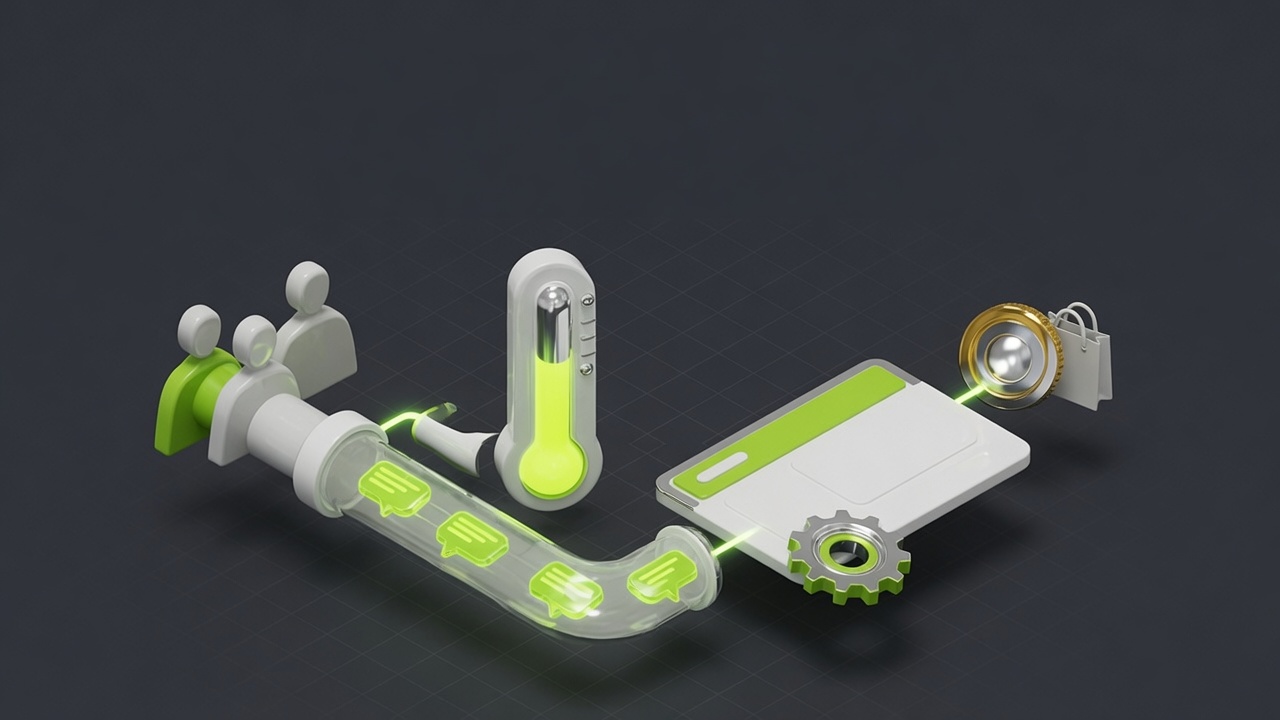
It replaces the "where are we on this?" email with a login. Clients see project status, shared files, invoices and messages in one place, so your team stops answering the same question by phone, text and email.
Most portals cover the same five jobs:
- Status: where the job, case or order stands right now
- Files: contracts, drafts, photos and reports in one folder per client
- Billing: open invoices and a pay button
- Messages: one thread per client instead of scattered inboxes
- Forms: intake questionnaires, approvals and signatures
Buyers already expect this. Gartner's May 2026 survey of 645 business buyers found that 70% prefer a fully digital self-service experience, as summarized by Elogic. The same survey found 69% still want a salesperson to validate what AI tells them. A portal handles the routine updates so your people can spend their time on the conversations that need a human.
What does client portal software cost in 2026?
Most small businesses will pay $19 to $99 a month, and the number of clients who log in drives the bill more than features do. These are the published starting points as of fall 2026:
- SuiteDash: Start at $19, Thrive at $49 and Pinnacle at $99 a month on monthly billing, according to Agiled's SuiteDash pricing breakdown. SuiteDash's own pricing page promises unlimited users on every plan and a 30-day free trial.
- Assembly: a free plan for 5 active contacts and one internal user. The Assembly pricing page lists a Starter plan with 50 active contacts, which Assembly's blog prices at $29 a month billed annually. Custom domains and removing the Assembly badge start on the Professional plan, and a HIPAA business associate agreement comes with Advanced.
- Softr: a free plan for 5 app users, then Basic at $19, Pro at $99 and Business at $329 a month on annual billing, per this Softr pricing analysis. Month to month, those plans cost $25, $119 and $395. Pro includes 50 client users and Business includes 100.
- HoneyBook and Dubsado: built for creatives and freelancers who sell proposals and contracts. Assembly's 2026 roundup lists HoneyBook from $29 a month and Dubsado from $335 a year.
Watch the user math. The Softr analysis prices a portal for 80 clients at $129 a month or more, because Pro's 50 client seats run out and extra seats cost extra. SuiteDash's flat, unlimited-user pricing is the opposite model, which is why it suits firms with many small clients.
Five ways to give clients a portal, cheapest first
Published 2026 starting prices. Stop at the first row that covers what your clients ask for.
Turn on the portal in a tool you already pay for
Some CRMs and practice management tools already include a client login. Switch it on, invite three friendly clients, and watch whether they use it. If the check-in emails drop, you're done. If the tool can't show what clients ask about, move down the list.
What does a custom client portal cost?
Quotes for the same portal can differ by a factor of ten. Modall, a development firm, puts a basic custom portal at $30,000 to $60,000 with login, document sharing and a status dashboard, built over 8 to 16 or more weeks. It estimates ongoing costs of $5,000 to $20,000 a year, and notes its ranges reflect Canadian rates and a team of 2 to 4 developers.
Refact's build guide puts a midrange portal with real workflow logic and integrations at $60,000 to $120,000. At the low end, MadXR publishes $5,000 to $15,000 for a focused first version covering login, status, documents, payments or messaging, and one or two integrations. It credits AI-assisted development for the drop.
The spread comes from scope, rate and who maintains the code. A focused version with one integration is a small web app. Single sign-on, audit logs and five integrations make it a software product, priced like one.
Cheap has a trap. Refact describes AI-generated portal code with hardcoded credentials and authentication that broke once payments were added, citing public cases that ended in an $18,000 cleanup and a full rewrite. A portal holds your clients' contracts and invoices, so the login code is the last place to save money.
When does a custom portal make sense?
Build when renting forces your team to copy data by hand or forces your clients into a tool that can't show what they came for. We use three triggers.
Clients need live data from a system you own
Portal software shows what you upload to it. If clients want shipment status, inventory counts or job progress from your own operations software, someone has to keep two systems in sync. That someone is usually a person with a spreadsheet.
That's the case for a custom web app. ShippingPath, the logistics web app we built, reports 99.4% on-time delivery across 47 countries, and that kind of tracking only works when the data comes straight from the operation. A $29 portal can't do it.
Per-seat pricing passes the cost of a build
Run the three-year math before you decide. Softr Business at $329 a month comes to $11,844 over three years for 100 client users. Modall's example of 500 users on a $500 monthly plan reaches $18,000 over the same period before any customization.
Compare that with a focused build at $5,000 to $15,000 plus hosting and upkeep. The crossover usually arrives in the hundreds of client logins. Dozens of clients almost never justify custom on cost alone.
Compliance rules out shared software
Healthcare, legal and financial firms often need a signed business associate agreement, enforced multifactor login, audit logs and strict access controls. Some subscriptions cover this: Assembly bundles a BAA, enforced MFA and an audit log into its Advanced plan.
Custom earns its cost here only when your rules on data location, retention or access go beyond what any vendor will sign. Our guide to website privacy compliance covers which state laws reach a small business.
Is there a middle path between renting and building?
Yes: a no-code portal on top of data you already keep. If your clients and jobs live in Airtable or a CRM, a builder such as Softr can put a branded login over that data in days. There's no second database to sync.
This is the option we recommend most often for service firms with 20 to 100 clients. Your team keeps working where it already works, and clients see a filtered view of their own records. Our breakdown of Airtable as a CRM shows the base structure that makes this clean.
Check your current software first, too. Some CRMs and practice management tools include a client login, and the cheapest portal is the one you already pay for. Our small business CRM comparison covers what the main options include.
Why do most client portals go unused?
Because the portal becomes a second inbox. Clients still get updates by email and text, so they never form the habit of logging in, and your team now updates two places.
A portal pays for itself when the check-in emails stop. MadXR measures success by "the drop in 'just checking in' emails ninety days later," and so do we.
Four habits fix most dead portals:
- Make the portal the only place where files and invoices live. Emails point to it instead of attaching things.
- Push every status change automatically, with a short notification that links straight to the page.
- Use magic links or saved logins. Every forgotten password costs you a client visit.
- Count check-in emails and calls for a month before launch, then again 90 days after.
The second habit is pure automation. When a job moves stages in your CRM, a workflow updates the portal and texts the client. Our Make vs Zapier vs n8n comparison covers the tools that run it. Our playbook to automate client onboarding shows where the portal fits in a client's first 90 days.
How do you decide this week?
Answer four questions in order and stop at the first yes:
- Does a tool you already pay for include a client portal? Turn it on and test it with three clients.
- Do your clients and jobs already live in Airtable or a CRM? Put a no-code portal over that data.
- Do you have fewer than a few hundred clients and no special compliance rules? Rent SuiteDash, Assembly or Softr and pick the plan by client count.
- Do clients need live data from your own systems, or do seat fees pass the cost of a build? Scope a focused custom version with one or two integrations.
Most businesses stop at question three. That's the right answer, and it usually costs under $100 a month.
If you land on a rental, we'll configure it, connect it to your CRM and wire the notifications through our client portal service. If your answer is question four, our custom web app service scopes the focused version first. Either way, send us how your clients check in on their work today and we'll tell you which path fits.
FAQ
Questions, answered.
What owners ask before giving clients a login.
Off-the-shelf client portal software runs about $19 to $99 a month for most small teams. SuiteDash starts at $19 a month with unlimited users, Assembly's Starter plan is $29 a month billed annually, and Softr's Pro plan is $99 a month for 50 client users. A custom build starts around $5,000 to $15,000 for a focused first version and $30,000 to $60,000 for a basic agency build.
It's worth it when your team spends real time answering status questions by email, phone and text. Measure check-in emails for a month before launch and again 90 days after. If that number doesn't drop, the portal has become a second inbox and needs fixing, usually by moving all files and invoices into it.
Yes. A no-code builder such as Softr can put a branded client login on top of Airtable or other data you already keep, usually in days. Clients see a filtered view of their own records and your team keeps working in the same base. Softr's Pro plan covers 50 client users at $99 a month on annual billing.
Some is, on specific plans. Assembly includes a HIPAA business associate agreement, enforced multifactor login and an audit log on its Advanced plan. Never upload patient information until the vendor has signed a BAA for the plan you're actually on.
Modall estimates 8 to 16 or more weeks for a basic custom portal with login, document sharing and a status dashboard. Off-the-shelf portal software can be live in days to weeks. A focused first version with one or two integrations is the fastest custom route.