You can write the perfect email, and none of it matters if it lands in spam. That is the quiet problem eating into most small-business email programs: the message is fine, the offer is fine, but a chunk of the list never sees it. On average, roughly one in six marketing emails never reaches the inbox at all. For a 5,000-person list, that is about 830 people you paid to reach and never did.
In 2026 the rules got stricter, not looser. Gmail and Yahoo now reject or defer mail that fails basic authentication, and the thresholds are unforgiving. The good news: deliverability is mostly a setup problem, and setup is fixable in an afternoon once you know what to touch.
Why deliverability quietly decides your email ROI
Every other email metric sits downstream of one number: did it reach the inbox. A 40% open rate on the 83% that arrived is not a 40% open rate on your list. It is 33%. Spam placement does not announce itself; your reports still show "sent," so the leak hides in plain sight while you assume the channel just underperforms.
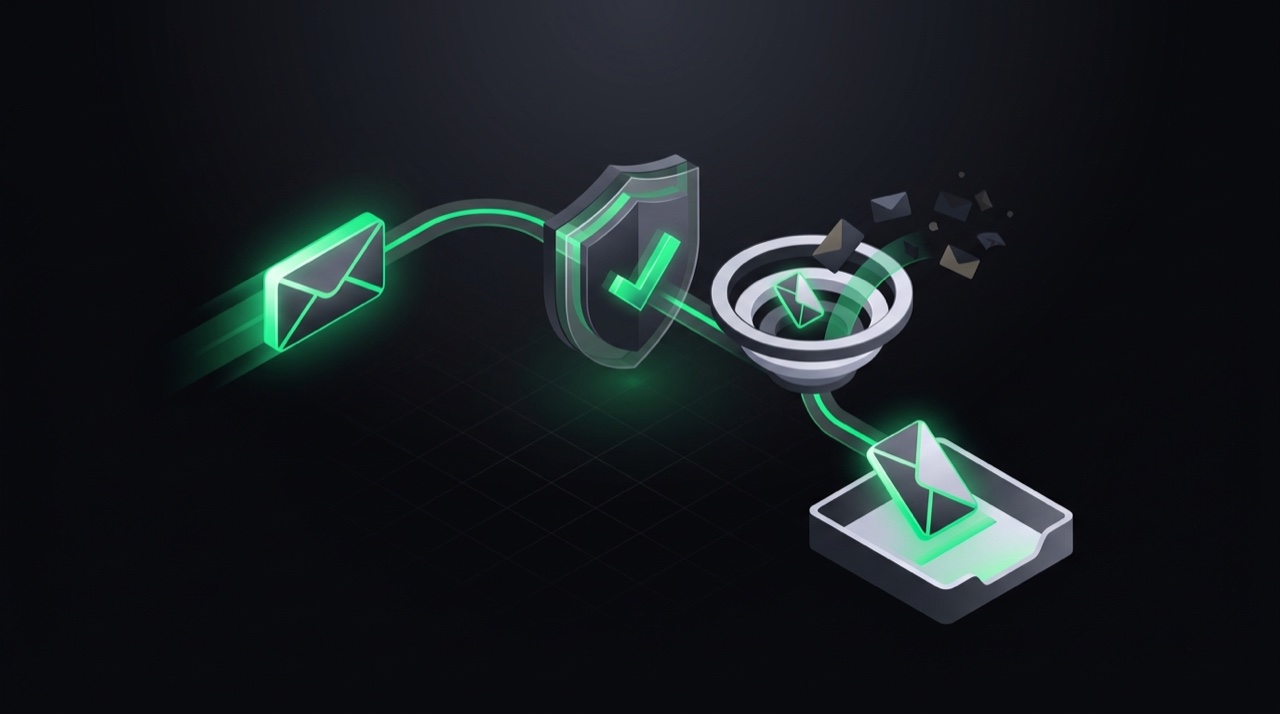
Mailbox providers decide placement in milliseconds, based on three questions. Are you who you say you are (authentication)? Do people want your mail (reputation)? Is this message relevant and safe (content and engagement)? Get the first one wrong and the other two never get a fair hearing.
Most "email doesn't work for us" problems are really "our email never arrived" problems. Fix placement first, then judge the channel.
The three records that prove you are you
Authentication is the fastest, highest-leverage fix, and it lives entirely in your DNS. Three records do the work:
- SPF (Sender Policy Framework) lists the servers allowed to send email for your domain. If a message comes from somewhere not on the list, it looks forged.
- DKIM (DomainKeys Identified Mail) adds a cryptographic signature to every message, so a provider can confirm nothing was altered in transit and it really came from your domain.
- DMARC (Domain-based Message Authentication, Reporting, and Conformance) ties SPF and DKIM to the domain people actually see in your From line, and tells providers what to do on failure.
DMARC has a policy setting that matters. Starting at p=none (monitor only) is acceptable while you check that legitimate mail passes, but the expectation now is to progress to p=quarantine or p=reject so spoofed mail using your domain gets stopped. Your email platform (Mailchimp, Klaviyo, and the like) generates the exact records to paste in. This is the same foundation your automated email flows depend on, because an unauthenticated welcome sequence is a welcome sequence in the spam folder.
The 2026 sender rules, in plain terms
Gmail and Yahoo tightened requirements starting in early 2024 and moved to strict enforcement through late 2025, including outright rejections at the SMTP level for non-compliant mail. The formal "bulk sender" rules apply once you send around 5,000 messages a day to Gmail, but the authentication baseline is now effectively required of everyone.
Three requirements matter most:
- Authenticate everything. SPF, DKIM, and DMARC, with the From domain aligned to SPF or DKIM. Missing any piece can mean the spam folder.
- One-click unsubscribe. Bulk marketing mail must include the
List-UnsubscribeandList-Unsubscribe-Postheaders so recipients can leave in a single click, without logging in, and you must honor it within two days. - Stay under the complaint line. Keep your spam-complaint rate below 0.10%. Hit 0.30% and Gmail stops helping you; your domain becomes ineligible for delivery mitigation, and recovery is slow.
The deliverability numbers that decide whether you get read
Representative 2026 benchmarks and the hard limits mailbox providers now enforce.
That 0.30% figure is smaller than it sounds. On a 10,000-send campaign, just 30 people hitting "report spam" crosses it. That is why a frictionless unsubscribe is your friend, not your enemy: an unsubscribe is free, a spam complaint is expensive.
Reputation is earned, not set
Authentication gets you in the door. Reputation keeps you there. Mailbox providers score your sending domain and IP on how recipients react over time, and a few habits protect that score.
Send from a dedicated subdomain, such as news.yourbusiness.com, and keep transactional mail (receipts, booking confirmations, password resets) on a separate stream. That way a rough marketing month never drags your invoices into spam. Warm new sending domains up gradually instead of blasting your whole list on day one, because a brand-new domain starts with zero reputation and places worse until it earns trust.
Then protect the score you build:
- Only email people who opted in. A bought or scraped list is the fastest way to torch a domain.
- Prune non-openers on a schedule. People who never engage are dead weight that lowers your average and raises your spam risk.
- Keep bounces low by cleaning invalid addresses before you send, not after they hurt you.
- Send on a steady cadence. Long silences followed by a sudden blast look like a compromised account.
This is the same discipline that makes automated lead follow-up work: relevance and timing beat volume every time.
Engagement is the new spam filter
Providers used to lean heavily on content keywords to catch junk. In 2026 they lean on behavior. Opens, clicks, replies, and "move to inbox" actions tell Gmail you are wanted; deletes without opening, "report spam," and long silence tell it you are not. Your reputation is really a rolling average of how people treat your mail.
This is why the same message reaches one person's inbox and another's spam folder. It also explains why placement varies by provider. Gmail deliverability runs high, often around 95%, but increasingly routes promotional mail to the Promotions tab rather than the primary inbox. Microsoft's Outlook and Hotmail are stricter, with inbox placement closer to 75% and the highest spam rates among the big providers, so a list heavy on work addresses needs extra care.
The practical takeaway: engagement is a resource you spend and refill. Mail your most active people often and your quietest people rarely, and your averages stay healthy. Keep blasting everyone the same way and the dead segment slowly poisons the reach of the live one. Segmenting by engagement is not a nice-to-have anymore; it is deliverability maintenance.
A practical setup checklist
If you do nothing else, do this, in order:
- Publish SPF, DKIM, and DMARC records for your sending domain, then send a test and confirm all three pass.
- Move DMARC from
p=nonetowardp=quarantineonce you have confirmed legitimate mail passes. - Set up a dedicated marketing subdomain and warm it up over two to four weeks.
- Turn on one-click unsubscribe in your email platform and confirm the headers are present.
- Add a suppression and sunset rule so chronic non-openers stop receiving campaigns automatically.
- Watch your complaint and bounce rates in your platform dashboard every send.
Once the plumbing is right, an optional finishing touch is BIMI (Brand Indicators for Message Identification), which displays your verified logo next to your messages in supporting inboxes. It requires DMARC at quarantine or reject plus a verified logo, and it lifts trust and open rates, but it is the cherry on top, not the cake.
Where this fits
Deliverability is not glamorous, and that is exactly why it is a moat: most competitors never fix it, so a clean, authenticated, well-warmed sender out-reaches them on the same list. If email is a channel you rely on, the setup is worth getting right once.
We handle this as part of email and SMS setup, wiring up authentication, subdomains, and the automated flows so your mail actually arrives and actually earns. If your open rates have quietly slipped and you suspect the inbox is the reason, get in touch and we will pressure-test your sending setup.
FAQ
Questions, answered.
What business owners ask us about getting email into the inbox.
Almost always one of three things: your domain is not authenticated (missing or broken SPF, DKIM, or DMARC records), your sending reputation is poor (too many complaints, bounces, or spam-trap hits), or your content and list hygiene are weak (buying lists, emailing people who never opted in, or sending irrelevant blasts). In 2026 the first one is the quickest win, because Gmail and Yahoo now reject or defer mail that fails authentication outright. Fix the DNS records first, then work on reputation and relevance.
They are three DNS records that prove your email is really from you. SPF lists which servers are allowed to send for your domain. DKIM adds a cryptographic signature so a provider can confirm the message was not tampered with. DMARC ties the two together and tells providers what to do when a message fails: nothing, quarantine to spam, or reject. You need all three, and DMARC has to 'align' with the domain people see in your From address. Most email platforms give you the exact records to paste into your DNS.
The strict bulk-sender rules formally kick in at around 5,000 messages per day to Gmail, which many small businesses stay under. But that does not mean you are safe. The authentication baseline (SPF, DKIM, DMARC) is now effectively required for everyone, because failing it triggers rejections and spam-folder placement regardless of volume. Treat the rules as the floor, not a threshold you can ignore until you are big.
Only email people who genuinely opted in, make unsubscribing one click and honor it within two days, and send relevant, expected mail on a steady cadence. Never buy or scrape lists. Watch the number: Google wants you under 0.10% complaints and treats 0.30% as the line where your deliverability gets throttled and is slow to recover. Prune people who never open, because dead weight drags your whole reputation down.
Send it from a dedicated subdomain, like news.yourbusiness.com or hello.yourbusiness.com, and keep transactional email (receipts, password resets) separate. This protects your root domain's reputation, so a rough marketing month never puts your invoices or booking confirmations in spam. Warm the subdomain up gradually rather than blasting your whole list on day one, because brand-new sending domains start with no reputation and place worse until they earn trust.
The 2026 average for marketing email sits around 83%, meaning roughly one in six messages misses the inbox even for legitimate senders. A well-configured sender with a clean, engaged list should beat that and aim for the low-to-mid 90s. If you are landing below 80%, something is wrong: check authentication first, then complaint and bounce rates, then list quality. Deliverability is not a one-time fix; it is a number you monitor.