Let's start with a real call, because the abstract version of this topic is useless. A caller dials a plumbing company at 8:40pm. The phone is answered on the second ring by a friendly voice that asks what's going on, hears "my water heater's leaking," confirms the address is in the service area, checks the calendar, offers two morning slots, books the 9am, texts a confirmation, and logs the whole thing in the CRM. No human was involved. The owner finds a booked job waiting when she opens her laptop the next morning.
That's an AI voice agent doing the one thing it's genuinely great at. No sci-fi, no hype, just a phone call that would otherwise have gone to voicemail (and probably to a competitor) turning into a booked job. This guide explains, in plain English, what these agents are, what they actually do well, how the technology works, what it costs per call, and, importantly, where it still falls short.
What an AI voice agent is (and what it isn't)
An AI voice agent is software that answers or makes phone calls, understands what the person says, holds a natural back-and-forth conversation, and takes real actions: booking an appointment, qualifying a lead, answering a question, logging a note. It's not a phone tree ("press 1 for sales"), and it's not a recording. It listens, reasons about what to say next, and does things in your real systems.
What it isn't is a replacement for human judgement. It will not talk an upset customer down, negotiate a tricky deal, or handle the one-in-fifty call that needs genuine empathy or improvisation. The right mental model is a tireless, unflappable front-desk assistant who handles the predictable calls perfectly and knows exactly when to say "let me put you through to someone."
Get that frame right and you'll make good decisions. Expect magic and you'll be disappointed; expect a very good receptionist for routine calls and you'll be delighted.
Five jobs it does well
Not every call is a good fit, but these five patterns are where voice agents reliably earn their keep. They're ordered by how dependable they are in real deployments: booking at the top, outbound at the bottom (effective, but the one to handle with the most care).
Five jobs an AI voice agent does well
Ranked by how reliably they work in real deployments, not by demo dazzle.
Booking appointments
The agent checks live calendar availability, books the slot, and sends a confirmation, all on the call. Reschedules and cancellations work the same way. This is the single most dependable job a voice agent does.
Lead qualification
It asks the three or four questions that decide whether a caller is worth your team's time (service needed, location, budget range, timeline) then routes hot leads to a human and books or defers the rest.
Answering FAQs
Hours, location, pricing ranges, 'do you service my area', 'what do I need to bring'. The repetitive questions that eat your front desk's day, handled instantly and consistently, 24/7.
After-hours coverage
The call that used to hit voicemail at 9pm now gets answered, qualified, and booked. Most people never leave a voicemail; they call the next business. This plugs that leak.
Outbound follow-up
Calling leads back to confirm appointments, chase no-shows, or re-engage old enquiries. Effective, but the one to deploy most carefully: tone and timing matter, and compliance rules apply.
The thread connecting all five: they're high-volume and reasonably predictable. The moment a call stops being predictable, the agent's job is to recognise that and route to a human, not to push on and improvise. If you want the numbers behind the theory, here is what these agents actually deliver in real deployments.
How the technology actually works (no jargon)
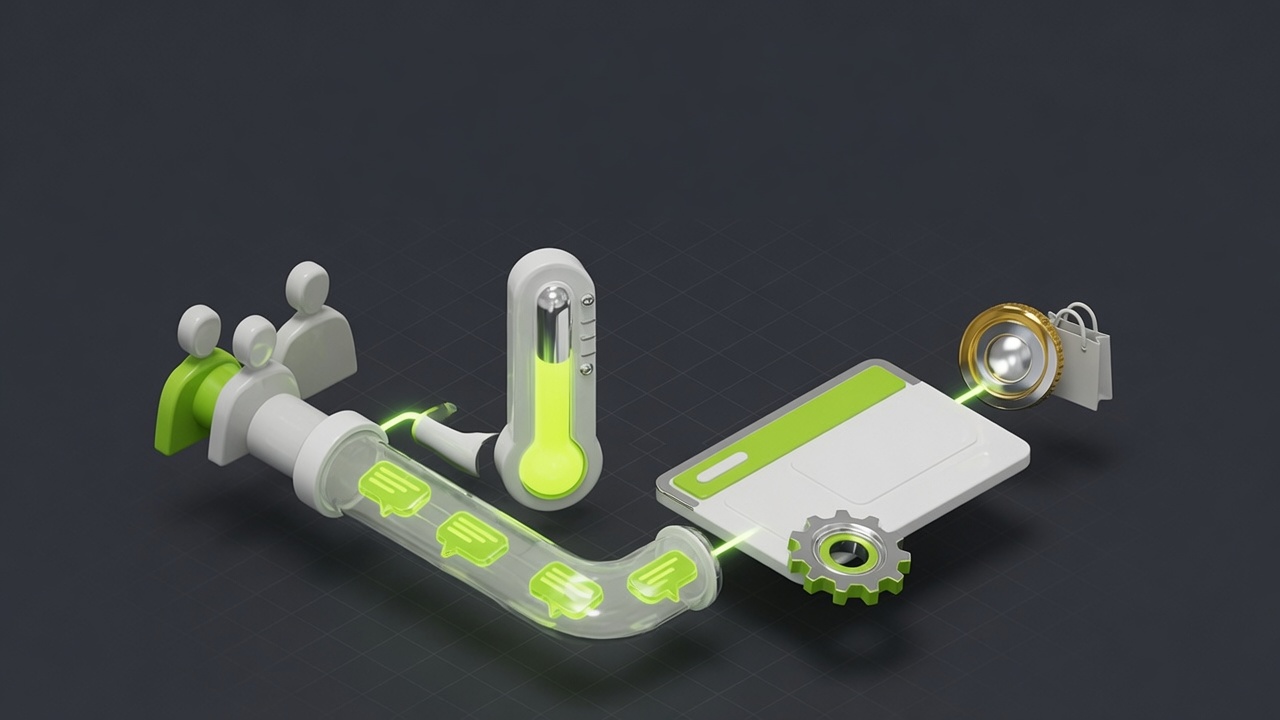
People imagine something far more mysterious than the reality. An AI voice agent is really five simple pieces working in a loop, and you can understand all of them in a paragraph each.
- The phone line. A service like Twilio provides the phone number and connects the call. Think of it as the wire.
- Ears (speech to text). As the caller speaks, their words are transcribed to text in real time, so the system has something to "read."
- The brain (a language model). That text goes to a model from OpenAI or Anthropic, which, guided by instructions you've written, decides what to say and what to do (e.g., "check the calendar," "book this slot").
- The voice (text to speech). The model's reply is turned back into natural-sounding speech, usually by a service like ElevenLabs, and played to the caller.
- Hands and memory (your data). To actually be useful, the agent reads and writes real data (calendar availability, lead details, call summaries) typically into a database like Airtable or straight into your CRM.
That whole loop (listen, think, act, speak) repeats every turn of the conversation, fast enough to feel natural. A platform like Vapi stitches these pieces together so they behave like one coherent system instead of five tools you have to wire up yourself. That's the entire magic trick. No part of it is beyond a plain-English explanation, and knowing the pieces helps you ask better questions when someone's selling you one.
What it costs per call
Pricing has two layers, and conflating them is how people get confused.
Usage is per-minute and adds up the cost of the phone line, the transcription, the model, and the voice. In 2026 that lands at roughly $0.07–$0.15 per minute all-in. So a typical three-minute call costs somewhere around $0.20–$0.45. A busy month of, say, 500 answered calls averaging three minutes is in the ballpark of $100–$225 in usage. That's it.
Setup is the one-time cost of designing the call flow, connecting your calendar and CRM, choosing and tuning the voice, and (the part that actually takes the time) testing it against real-world messiness. For a focused service-business agent that's usually a few thousand dollars.
Now compare that to the alternatives. A part-time receptionist is a salary. A traditional answering service charges per call and just takes messages; it doesn't book anything. And a missed after-hours call is often a lost customer worth hundreds or thousands. Measured against those, the per-call cost of an agent is close to a rounding error. The expensive part isn't running it; it's not having something answer the phone.
Where it still falls short (the honest part)
Being straight about the limits is how you avoid an expensive mistake.
- Heavy accents, bad lines, and background noise still trip up transcription occasionally. It's far better than it was, but not perfect.
- Emotional or high-stakes calls (a furious customer, a sensitive situation) need a human, fast. The agent's job there is to recognise it and hand off gracefully, not to manage it.
- Truly novel requests that don't fit any pattern in its instructions will expose the edges. Good design routes these to a person rather than letting the agent freelance.
- Outbound carries compliance rules (consent, calling hours, do-not-call) that vary by region. It works, but it needs care and the right guardrails.
The teams that get burned try to make the agent handle everything. The teams that win let it handle the predictable majority flawlessly and design a clean, fast handoff for the rest. That handoff is the most important part of the build, and it's the part cheap deployments skip.
How we deploy them at HiKit
Our process is built around removing risk before the agent ever owns your main line. We start by writing a tight call flow for one specific job, usually after-hours booking, because the ROI is obvious and the stakes are contained. We connect it to your real calendar and CRM, give it a natural voice, and write explicit escalation rules. Then we pilot it on a slice of calls so you can listen to real recordings and hear it perform before it goes wider. We review transcripts weekly for the first month and tune the rough edges. Only then do we expand its responsibilities.
That sequencing is the whole difference between an agent you trust and one you switch off after a week.
If you want to hear what a HiKit-built agent sounds like on a real call, book a free automation audit. We'll map which of your calls are worth automating and which should stay human. You can also see the automation systems we've shipped, or read more about how our AI voice agents work. And if you're earlier in the journey and still deciding what to automate at all, start with our guide to where AI automation pays off first.
A voice agent won't replace your team. But it will make sure the phone gets answered, the routine calls get handled, and the leads you're already paying to generate stop slipping away at 9pm. For most service businesses, that's the whole point.
FAQ
Questions, answered.
Everything people ask us about this, answered straight.
Yes, booking is the job voice agents do most reliably. The agent answers, understands the request, checks your live calendar, books the slot, and confirms, all on the call. Where it gets unsure or the call turns complex, a well-built agent hands off to a human instead of guessing. The realistic expectation is that it handles the routine 60–75% of calls and routes the rest to you.
Modern voices are good enough that many callers don't immediately clock it, but we recommend a brief, honest disclosure at the start. It builds trust and, in some regions, it's required. In our experience callers care far more about getting their problem solved fast than about whether a human did it. A smooth AI beats a voicemail every time.
Two layers: usage and setup. Usage runs roughly $0.07–$0.15 per minute once you add up the telephony, speech-to-text, the language model, and the voice, so a typical 3-minute call costs around $0.20–$0.45. Setup (call flow design, integrations, testing) is a one-time build, usually a few thousand dollars for a service business. Against the cost of a missed call or a part-time receptionist, the math is usually easy.
It should do exactly what a good receptionist does: ask a clarifying question, and if it still can't help, transfer to a human or take a message. The failure mode you must avoid is an agent that confidently does the wrong thing. We build explicit escalation rules so anything ambiguous, emotional, or high-stakes goes straight to a person.
In plain terms: a phone number and call routing (Twilio), a layer that turns speech to text and back (often handled by the orchestration platform), a language model that decides what to say (OpenAI or Anthropic), a natural voice (ElevenLabs), and a place to read and write data like your calendar and CRM (we usually use Airtable). A platform like Vapi ties these together so they behave like one system.
Yes, that's the point. The agent reads live availability from your calendar and writes bookings, lead details, and call summaries straight into your CRM. Without that integration it's just a fancy answering machine. With it, a booked call shows up in your systems the same as if a human took it.
No. Voice agents shine for high call volume, repetitive enquiries, and after-hours coverage: home services, clinics, salons, logistics, professional services. They're a poor fit where nearly every call is a delicate, high-context conversation. The honest test: if a chunk of your calls follow a predictable pattern, an agent helps. If every call is unique and sensitive, keep it human.
A focused agent for one job (say, after-hours booking) can be live in about 1–2 weeks, most of which is designing the call flow and testing edge cases against real recordings. A broader agent handling multiple call types takes longer. We always pilot on a portion of calls first so you can hear it perform before it owns the line.