What you get
Product and app interfaces designed around real user tasks, so the people who use your software daily move through it quickly and without confusion.
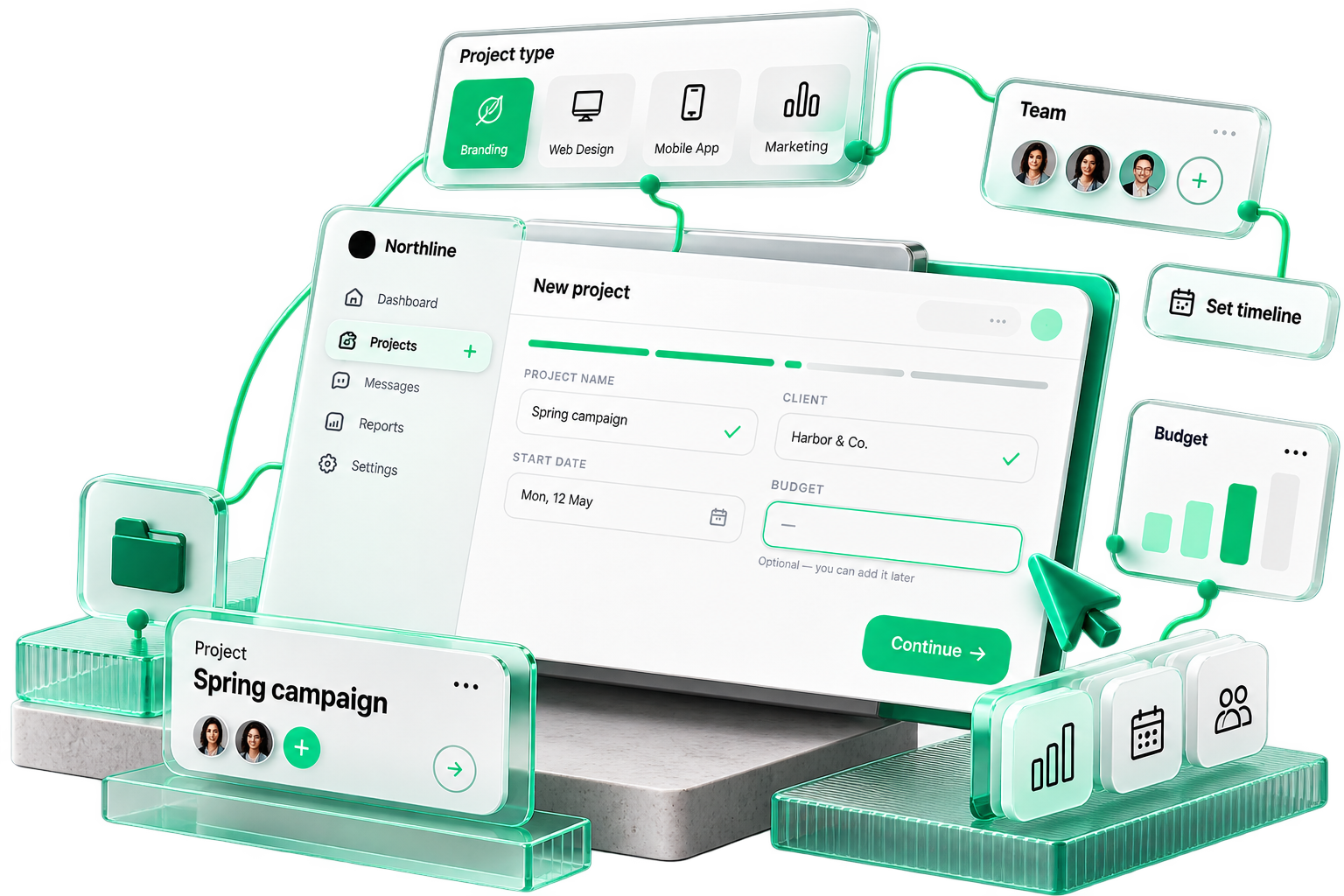
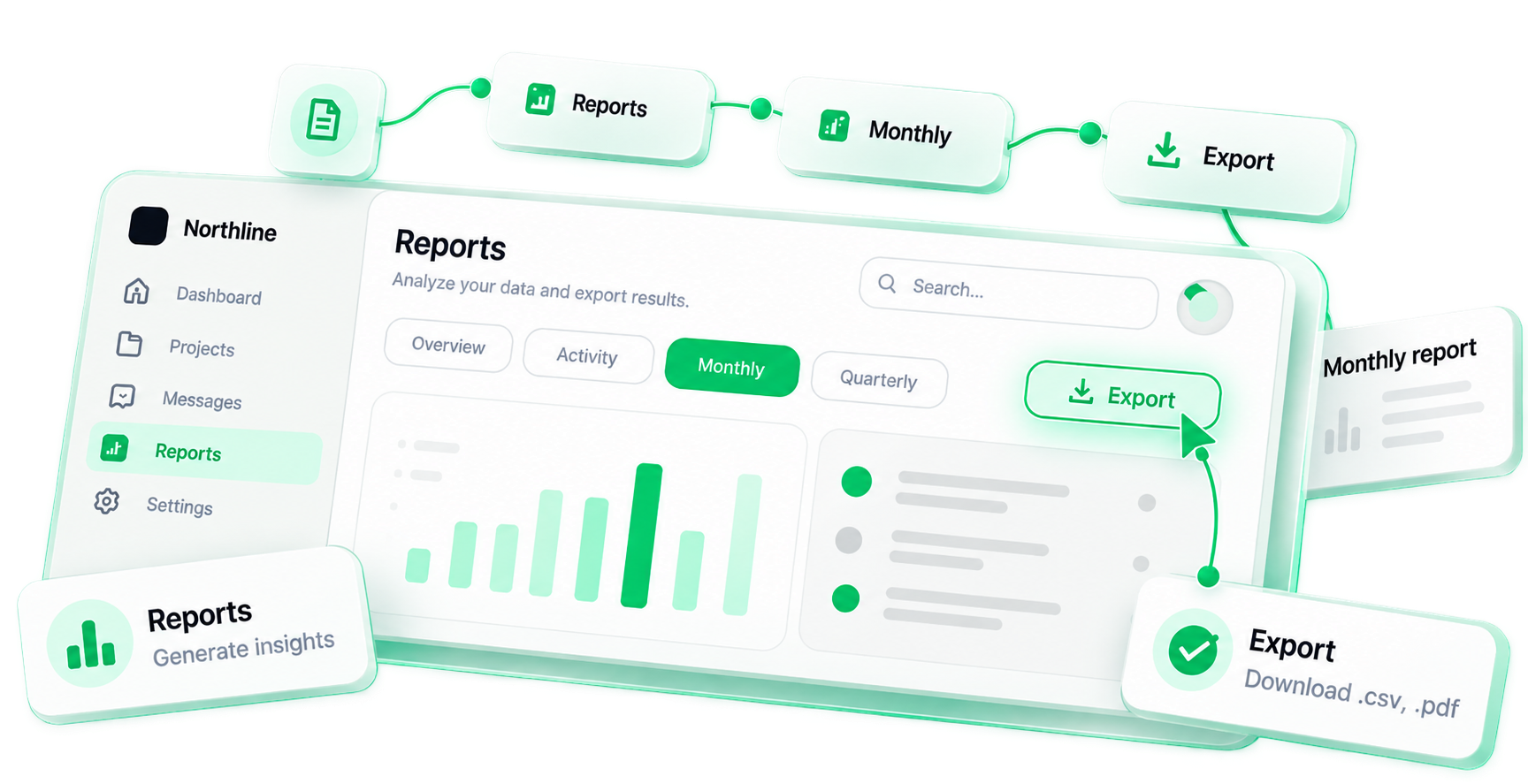
UI/UX design decides whether people understand your product in seconds or give up on it. We design the interface around the tasks your users actually do, removing steps and confusion before a line of code is written, then make every screen clear, consistent, and fast to use. The goal is software people move through without thinking about it, because the hard thinking happened in the design.
A systemized engagement, so the work moves fast without cutting corners.
- 01
Research and user flows
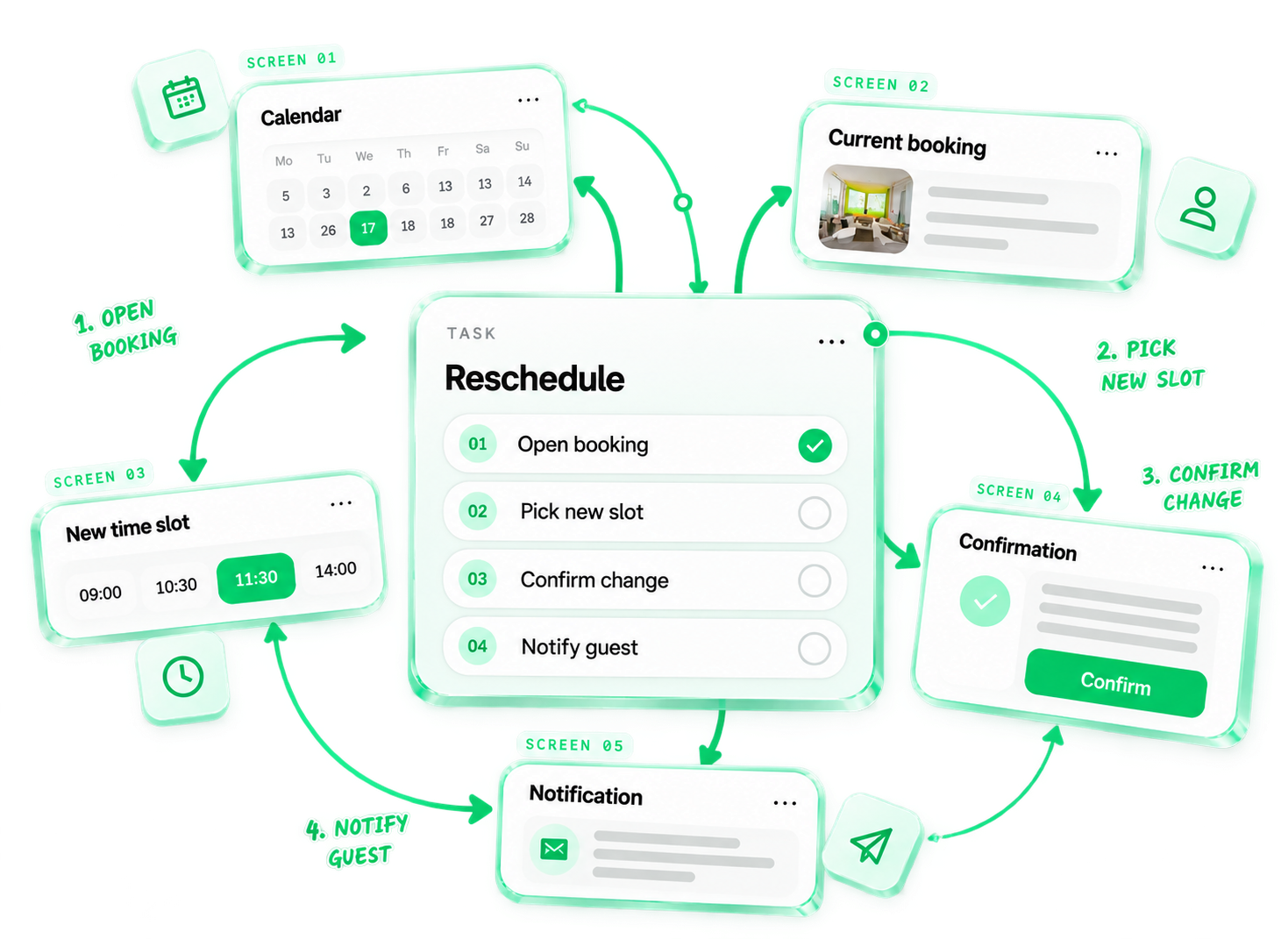
We start by learning who uses the product, what they are trying to get done, and where the current experience trips them up. Then we map the core user flows. Understanding the real tasks first is what separates an interface that fits how people work from one that merely looks tidy.
- 02
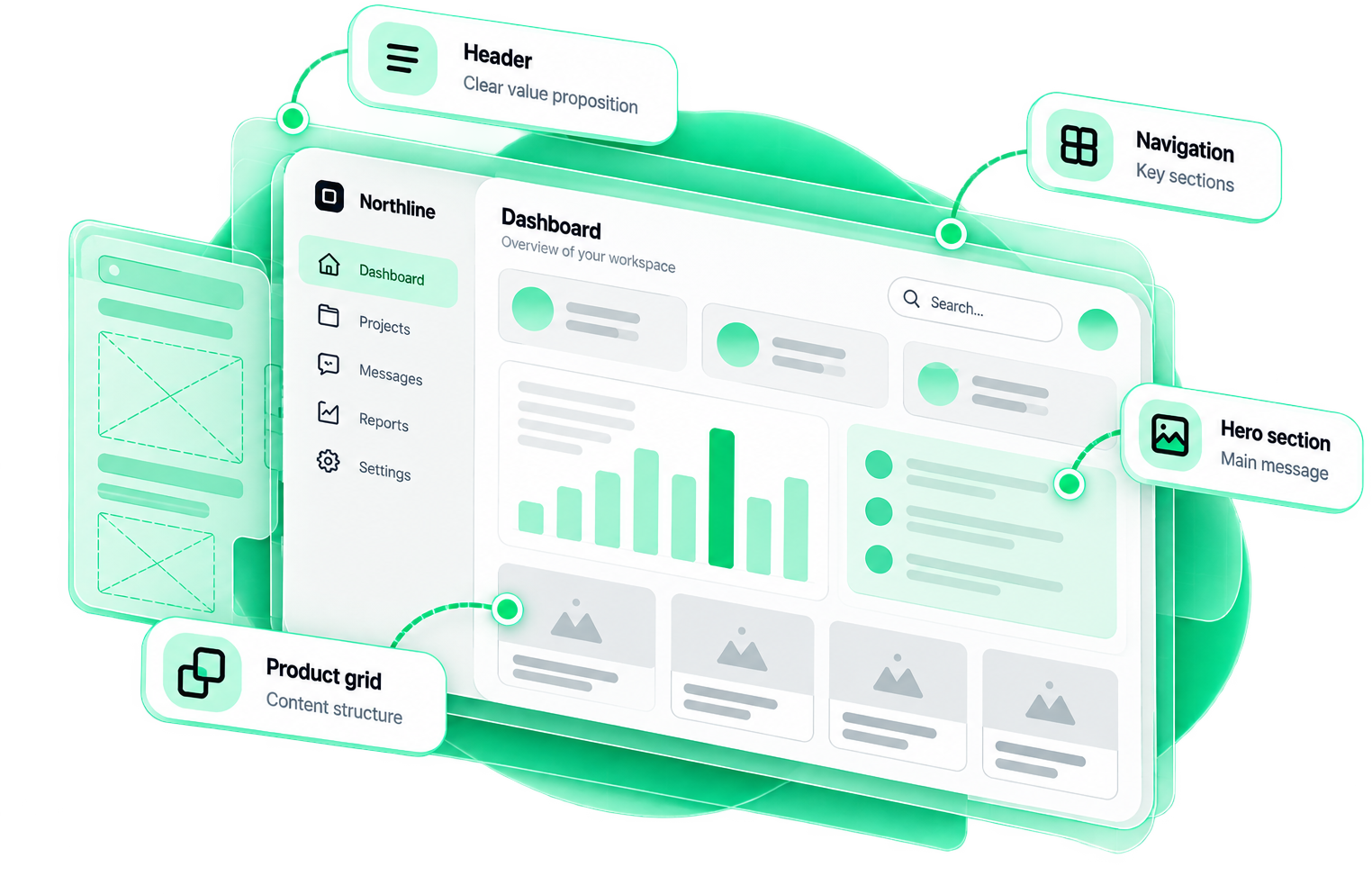
Wireframes and structure
We map every screen, role, and action in wireframes, working from real tasks rather than placeholder content. This is where we cut steps, resolve edge cases, and decide what each screen needs to show. You review and approve the structure in one round, which keeps the work focused and grounded.
- 03
Interface design
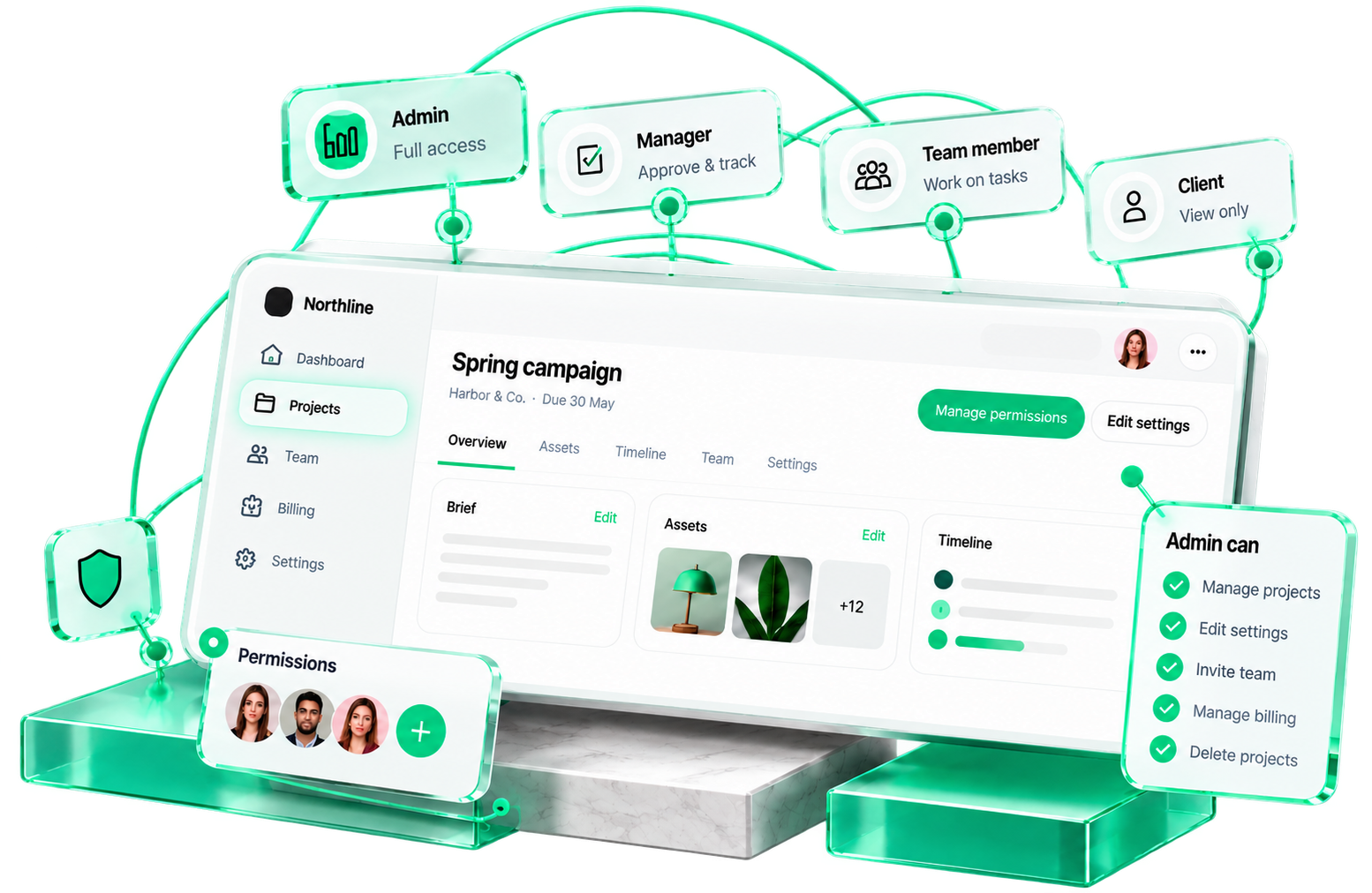
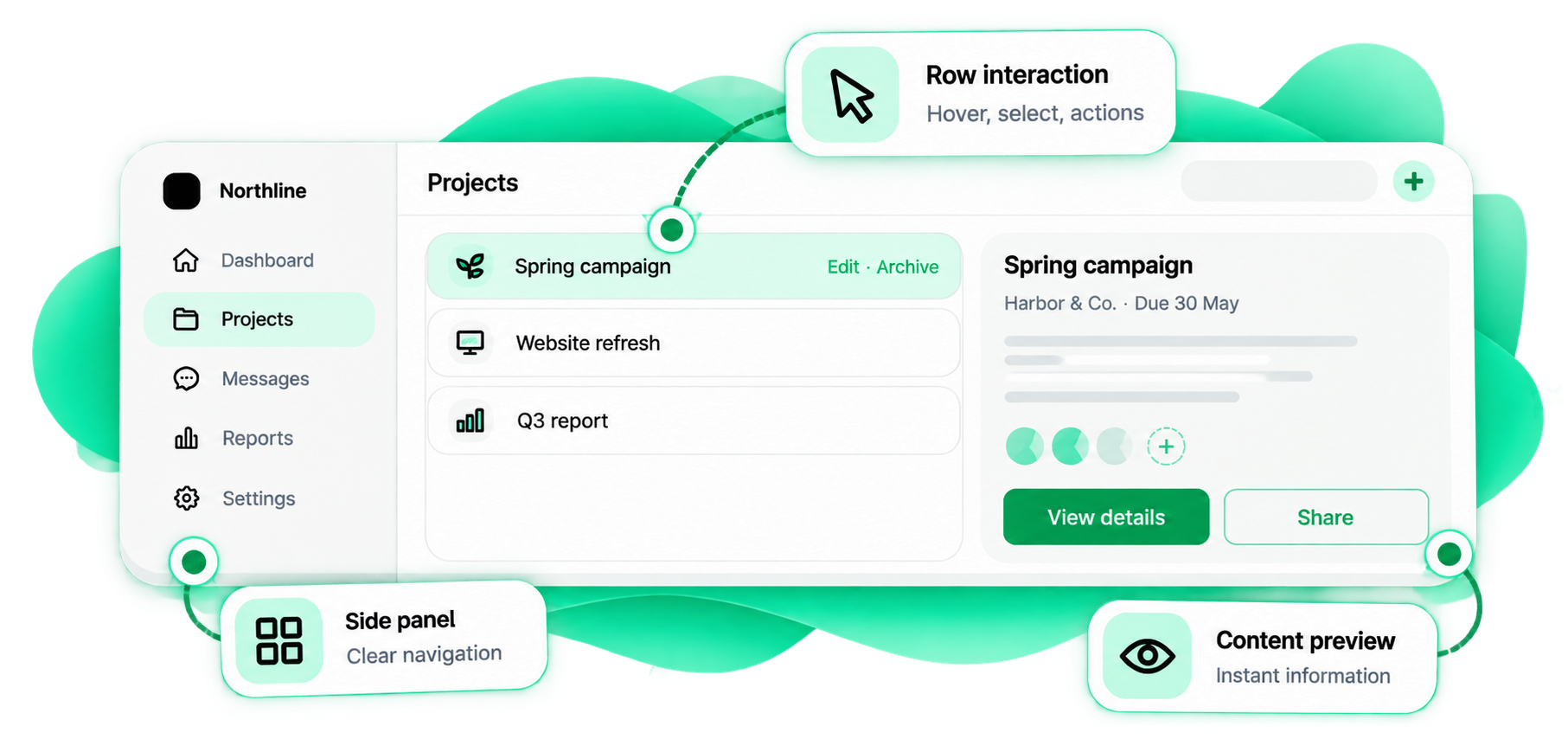
We design the high-fidelity interface: clear hierarchy, sensible defaults, and states for loading, empty, error, and success. We design reusable components and patterns, so new screens stay consistent as the product grows. You see real designs that show how the product looks and behaves, not just static mockups.
- 04
Prototype and validate
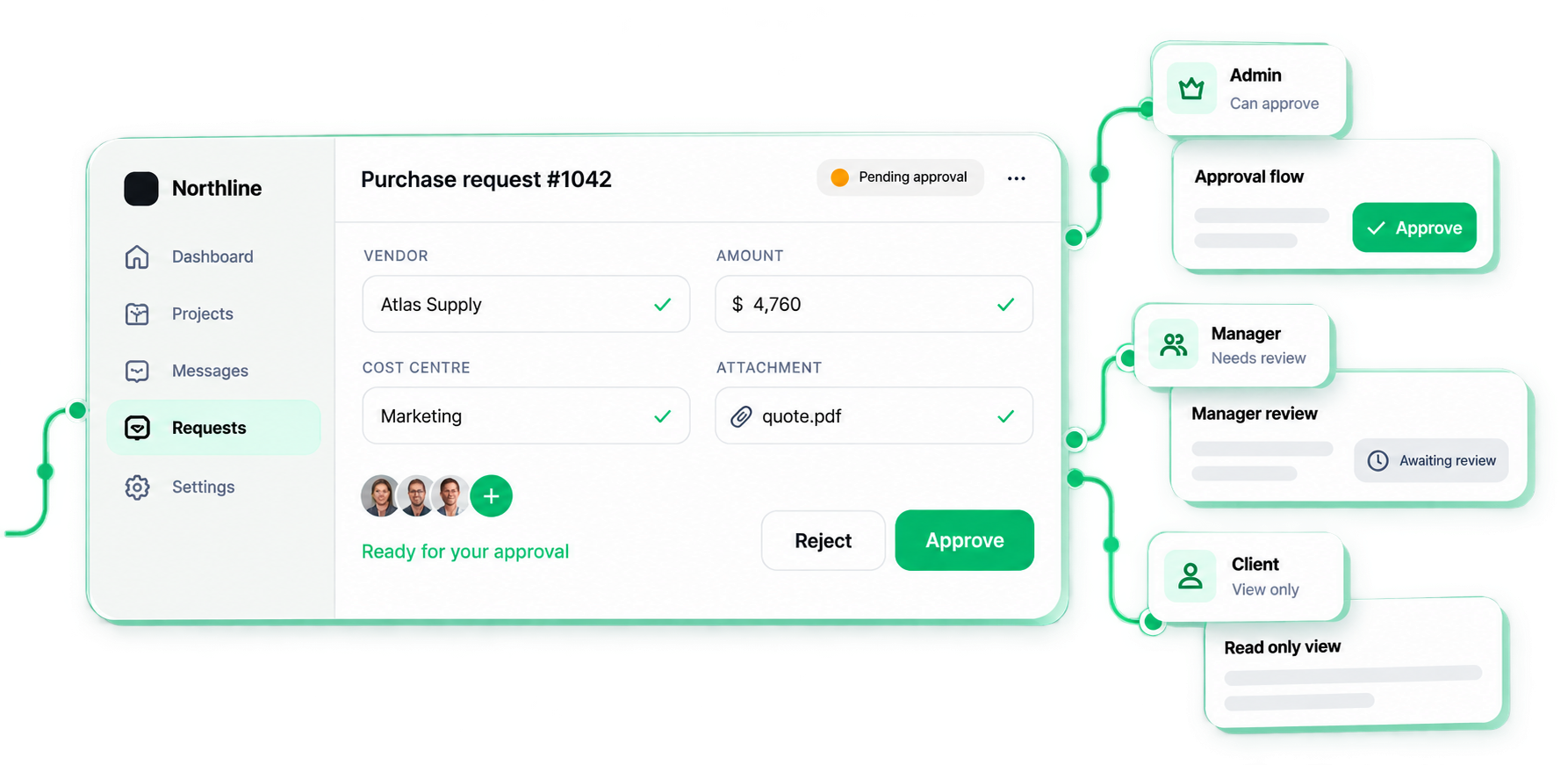
We build an interactive prototype so the flows can be clicked through and tested before development. Putting a working prototype in front of real users surfaces friction early, when it is cheap to fix, rather than after engineers have built the wrong thing and it is expensive to change.
- 05
Handover to build
We hand over an organized, build-ready design file with the components, states, spacing, and behavior documented, plus the prototype. Developers get a clear spec they can implement without guessing intent, so the built product matches the design instead of drifting from it during the build.
Everything you walk away with, owned by you with no lock-in.
- Mapped user flows built around the real tasks your users need to complete.
- Wireframes that cut steps and resolve edge cases before design begins.
- A high-fidelity interface design with clear hierarchy and sensible defaults.
- Designed states for loading, empty, error, and success, not just the happy path.
- A reusable component and pattern library, so the product stays consistent as it grows.
- An interactive prototype for testing and stakeholder sign-off before build.
- A build-ready design file with components and behavior documented for developers.
The things buyers ask us before they start.
What is the difference between UI and UX design?+
UX design is about how the product works: the flows, the structure, and how easily people complete their tasks. UI design is about how it looks: the visual layer of screens, components, and states. They depend on each other, and we design both together so the product is clear and easy to use.
Is UI/UX design only for apps, or websites too?+
Both, though the term usually points to product work: web apps, mobile apps, dashboards, and software where people log in and complete tasks. For a marketing website, our web design service is the better fit. For an interface people use to get work done, this is the one.
Why does UX design matter for my product?+
Because confusing software gets abandoned. Good UX removes friction so users reach their goal quickly, which drives adoption, retention, and fewer support requests. Designing the flows properly before development also saves money, since fixing a flow in design is far cheaper than rebuilding it in code.
Do you test designs with real users?+
Where it adds value, yes. We build an interactive prototype so flows can be clicked through and tested before development, which surfaces friction early when it is cheap to fix. Testing with real users at that stage prevents engineers from building the wrong thing.
Do you hand off designs developers can build from?+
Yes. We deliver an organized, build-ready file with components, states, spacing, and behavior documented, plus the prototype. Developers get a clear spec they can implement without guessing, so the built product matches the design. We can also build it for you as one project.
How much does UI/UX design cost?+
It depends on the number of screens, the complexity of the flows, and whether prototyping and testing are involved. We scope every project on a short call and give a fixed quote before work begins, so there are no surprises. You can also get a fast ballpark from HiKit AI.
Industries where UI/UX Design is part of the solution bundle we build.
Services we often pair with UI/UX Design.
Response within 1 business day. No commitment required.